Beauty
What is castor oil?
In brief
Castor oil is a vegetable oil obtained from the seeds of Ricinus communis. Natural castoreum comes from beavers and has been used in perfumery. A castoreum note in a fragrance can also be recreated without animal ingredients.
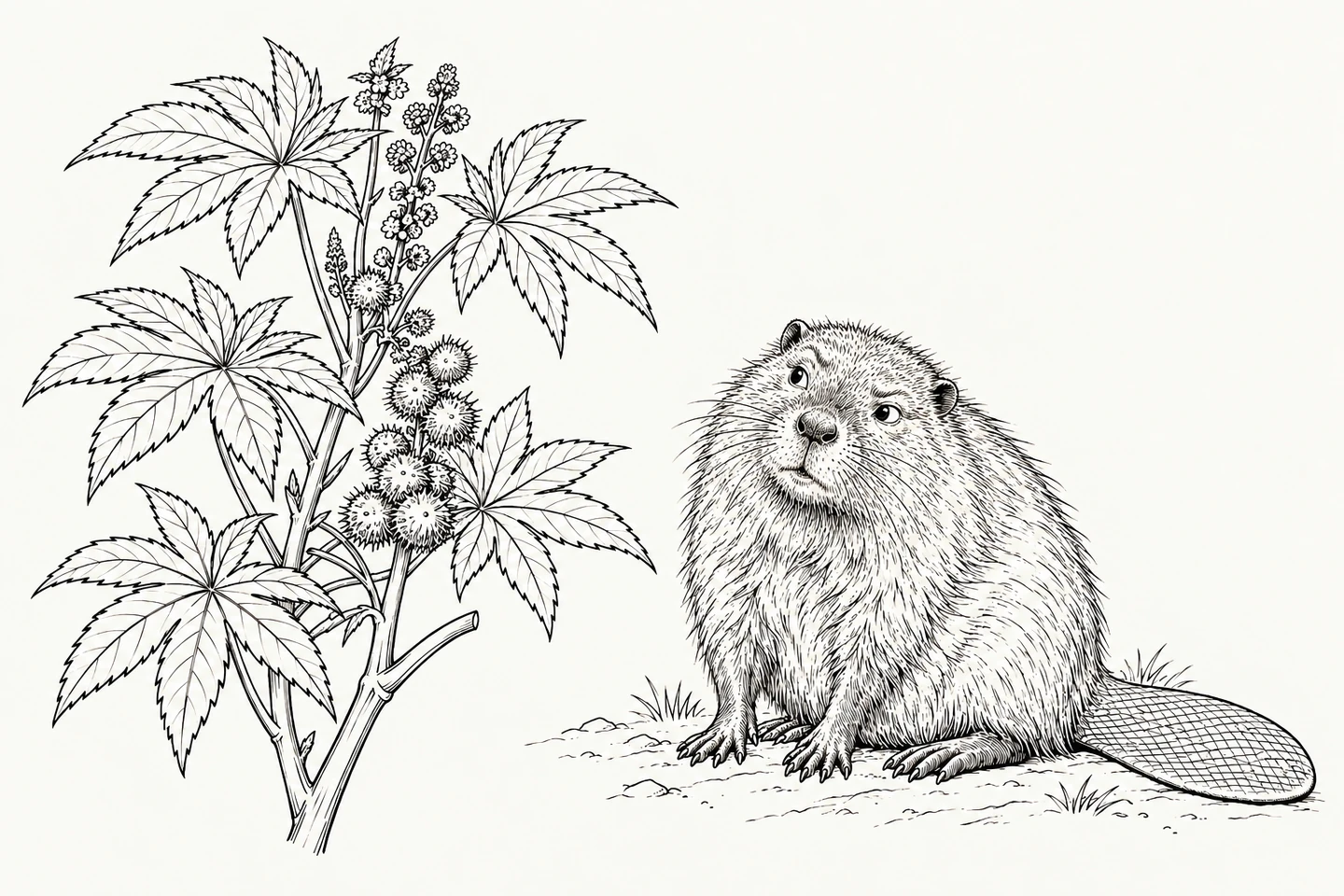
I’ve come across the same confusion several times: castor oil is taken to be something obtained from a beaver. In French, castor does mean beaver. The oil is huile de ricin.
Inside a lip balm
On a cosmetic ingredient list, Ricinus communis (castor) seed oil identifies the plant oil. Its uses include conditioning the skin and adding gloss to lip products. Finding it in a lipstick tells us something about how the formula works and the finish it gives the lips.
Living Nature’s Lush Tinted Lip Hydrator lists castor oil alongside beeswax and mānuka honey. The beeswax appears as Cera alba and the honey as Mel. Someone avoiding animal-derived ingredients would still need to consider both. Recognising the plant oil resolves one question about the product’s contents. There’s still a whole formula to read.
Castoreum in a perfume
Natural castoreum is a secretion from a beaver’s castor sacs, located near its genitals. The Smithsonian describes a warm, leathery smell when the material is diluted. Extracts have been used in perfumery. That association with the animal is real.
A castoreum note on a perfume’s website needs a little more attention, though. Zoologist places a castoreum reconstitution among the base notes of Beaver Maple Edition, alongside vanilla and patchouli. It identifies the reconstitution as synthetic and states that this fragrance contains no animal products. It’s a helpful detail to include on a perfume named after a beaver.
In that description, castoreum names an olfactory effect the perfumer has reconstructed. Reading the word elsewhere would leave me wanting the same explanation. A description of a fragrance’s smell can leave the source of its ingredients quite unclear.
With a perfume that lists castoreum without further detail, I would ask whether its formula uses an animal extract. If it does, I’d want to know how the material was obtained before forming a judgment about its use.
Sources & references
- Cosmetic Ingredient Review: assessment of castor oil and related cosmetic ingredients
- COSMILE Europe: Ricinus communis seed oil, origin and cosmetic functions
- Living Nature: Lush Tinted Lip Hydrator ingredient list
- Smithsonian’s National Zoo: beavers and castoreum
- Zoologist: Beaver Maple Edition, notes and statement on animal ingredients