Yves Saint Laurent’s Le Smoking Turns 60
In brief
Only one haute couture client bought the original Le Smoking in 1966. Sixty years later, its anniversary invites a closer look at its younger audience, Helmut Newton’s photograph and the freedom to wear it differently.
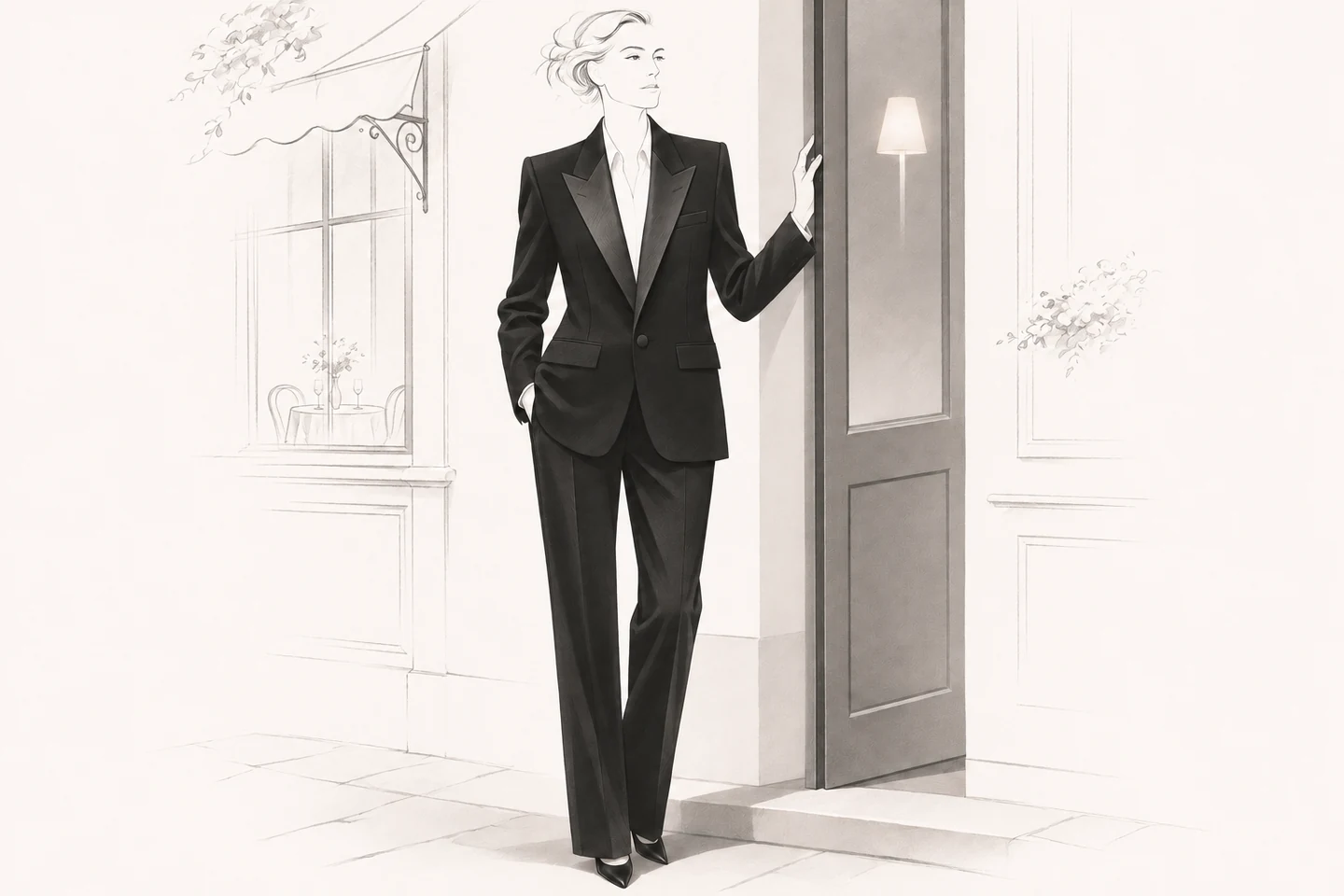
In 1966, a woman could buy an Yves Saint Laurent tuxedo and be refused entry to a restaurant because she was wearing trousers. Sixty years later, we admire the elegance of that silhouette. I think of the woman having to explain her outfit at the door.
Saint Laurent presented his first women’s Smoking in his autumn-winter 1966 haute couture collection. According to the Musée Yves Saint Laurent Paris, only one haute couture client bought the original model. Its ready-to-wear version found an enthusiastic audience among the younger customers of Saint Laurent rive gauche. The suit had found the women who wanted to wear it.
Saint Laurent adapted the conventions of masculine evening dress to a woman’s body. The balance of the jacket and trousers belonged to the design. Calling the result menswear for women tells us where some of the ideas came from, then stops short of considering the work.
I like the severity of a tuxedo. With so little decoration to distract the eye, the proportions have to earn their place. A jacket can make the whole outfit seem assured or leave its wearer looking uncomfortable in somebody else’s idea. Le Smoking also offered room for a woman’s taste to affect the result. A shirt, bare skin, a jacket worn closed: the decisions could change its character without making it unrecognisable.
That uneven reception interests me. We’re accustomed to treating Le Smoking as an obvious achievement. At the time, the people prepared to order couture gave it very little business. Saint Laurent had proposed something for which a different clientele had an appetite. The women who wanted it helped determine the life it would have.
Helmut Newton’s Rue Aubriot image appeared in French Vogue in 1975, nine years after the first Smoking. The University of Michigan Museum of Art holds a version showing a suited woman in a Paris street beside another wearing only a hat and heels. The clothed figure has considerable presence. An account of the suit as a woman borrowing male authority seems inadequate beside that image. Its appeal also involves sex, ambiguity and the pleasure of looking at clothes.
A woman buying one needn’t have been trying to make an argument about power. She could have found the outfit attractive. I’d allow her that straightforward reason, particularly when so many accounts of women’s clothing insist on explaining the wearer’s intentions for her.
Saint Laurent continued producing versions of the tuxedo until 2002. He gave the idea years of attention. Our attachment to Newton’s photograph can make that continued work less visible, leaving one image to stand for an outfit that women could wear in different ways.
Turning it into a standard that every subsequent wearer must meet would be a miserable way to honour the clothes. A buttoned shirt shouldn’t require an apology from a woman who has no wish to reproduce its sexual charge.
Sixty years make a design easier to admire. An anniversary allows a house to celebrate the judgement of its founder, with the confidence that subsequent history has supplied. The museum records that single couture sale. I’d put it in the anniversary advertising.
Sources & references
- Musée Yves Saint Laurent Paris: Le premier smoking, 1966, initial couture reception, rive gauche success and subsequent collections.
- The Metropolitan Museum of Art: Yves Saint Laurent: When Fashion Meets Art, 14 December 2023.
- University of Michigan Museum of Art: Helmut Newton, Rue Aubriot, Paris, 1975.