Can an ordinary material become precious?
Updated
In brief
A construction tarpaulin is an unlikely starting point for a wardrobe. Rebecca Nardi’s work made me reconsider how much a material’s value depends on the decisions surrounding it. Chanel’s jersey and Margiela’s porcelain offer different ways into that question.
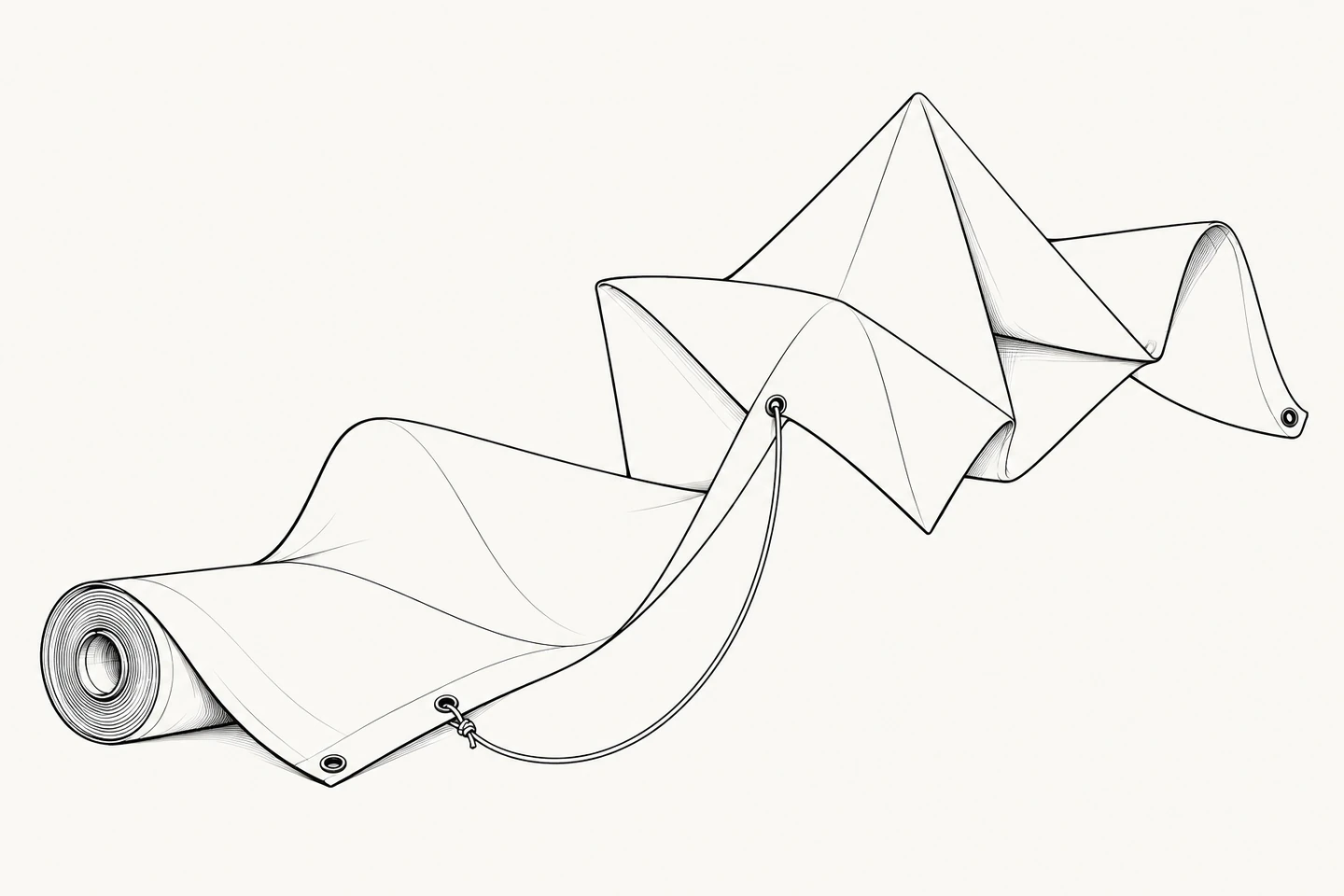
I can recognise a construction tarpaulin immediately. Seeing one turned into clothing takes a little longer to process. I start wondering about its stiffness, the edges against the skin and the weight pulling on a seam.
Rebecca Nardi uses tarpaulins, electrical cables and construction ropes in her Architecte collection. Her studio links this work to her background in interior architecture. Structure and volume carry over into garments and jewellery.
The connection makes sense to me. Someone accustomed to thinking about spaces will bring particular concerns to clothing. I would still want to examine the pieces closely. A photograph leaves me guessing about how comfortably a shoulder sits or how the material behaves when its wearer turns.
The pleasure of wearing jersey
Chanel’s jersey offers a useful complication. Fine silk jersey already had qualities worth appreciating before she used it.
The Victoria and Albert Museum describes the textile’s earlier associations with men’s sportswear and underwear. In the 1910s, Chanel brought it into women’s resort wardrobes, including clothes suited to Deauville and Biarritz.
I suspect much of their appeal would have become apparent during an ordinary day. Softness matters. So does being able to move easily in clothes and feeling comfortable enough to forget about them.
“Ordinary” becomes a slippery description here. Jersey names a knitted structure; the fibre and quality can vary considerably. The material needs to be described accurately before we build an argument around its transformation.
The plate remains visible
Margiela’s porcelain waistcoat raises more awkward physical questions. The Metropolitan Museum of Art dates its example to autumn/winter 1989–90 and lists porcelain, metal and cotton among its materials.
I find myself looking at the joins. Each fragment has to be held in place, and its relationship with the next affects the garment’s shape. Weight and fragility become part of the design.
The porcelain keeps something of its previous life. You can still recognise tableware in a piece intended for the body. That retained identity fascinates me. I would be curious to know how that fascination survives the experience of wearing it.
After the surprise
Unusual materials make effective photographs. They also give us an easy story to repeat: a designer made clothing from something we would never have considered wearing.
My judgement remains provisional at that stage. The designer’s reputation and the setting in which I encounter the work can influence my response. A museum label gives an object a certain authority before I have spent much time looking.
Living with it would introduce other criteria. An irritating edge could become impossible to ignore. A surface might age beautifully. A repair could reveal how thoughtfully the piece was assembled.
Preciousness seems partly bound up with that continued attention. I am interested in objects that give us new reasons to keep them once their initial surprise fades.