Is a Lab-Grown Diamond a Real Diamond?
In brief
Yes. A laboratory-grown diamond is diamond: carbon with the same crystal structure and essentially the same chemical and physical properties as a natural stone. Moissanite and cubic zirconia are different materials.
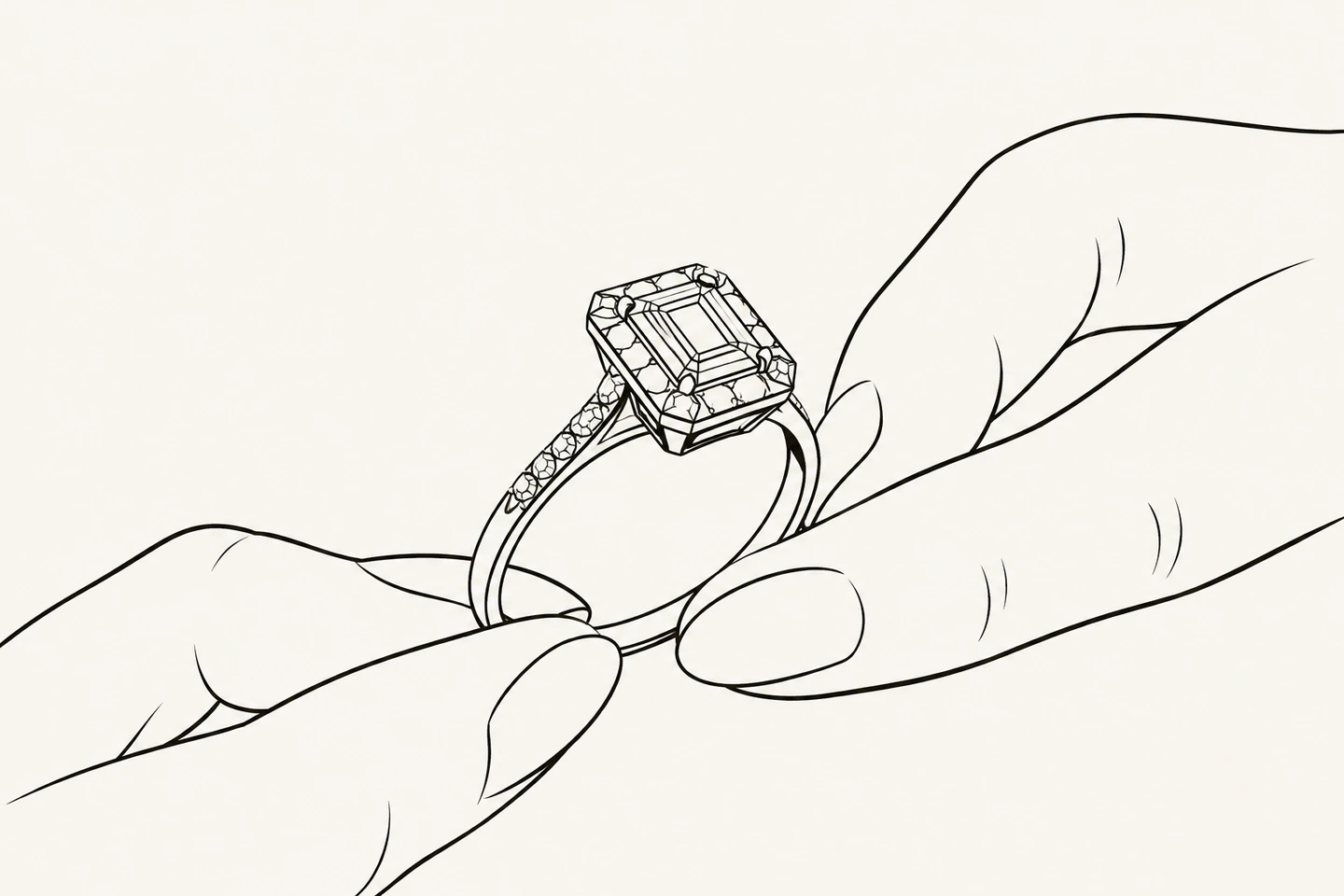
Would I consider a piece of jewellery with a laboratory-grown diamond? Yes, although a sales pitch built entirely around how large a stone I could afford would soon lose my attention.
I would want to see some design.
The opportunity seems rather good to me. A jeweller can work with diamonds grown for the purpose and still has all the questions of proportion, setting and wear to resolve. Even the underside of a setting deserves attention. On a ring, it will sit against the skin, usually unseen. That seems a good place to look for care in the making. Carat weight tells us very little about any of this.
As for the material, the answer is fairly straightforward.
Diamond can grow underground or in controlled conditions using a small diamond seed. In the HPHT process, carbon crystallises under intense heat and pressure. CVD uses a carbon-containing gas from which diamond grows on the seed. Once grown, the crystal can be cut and polished. “Synthetic” describes that human-controlled origin in gemology. It can sound unappealing on a jewellery label, but it does not mean the stone is imitation diamond.
Moissanite and cubic zirconia belong in a separate conversation. They can resemble diamond and are used as alternatives to it; their composition and properties are different.
Origin is a perfectly reasonable thing to care about. I understand wanting a natural diamond because it formed in the Earth. Its geological history can be part of the pleasure of owning it. Someone buying a jewel for that reason would be disappointed by a laboratory-grown stone, however beautiful. Calling the preference foolish would be a poor way to sell jewellery.
Equally, a laboratory-grown diamond deserves an accurate description without an apologetic explanation of its existence.
What I would ask the jeweller
For an important purchase, I would ask for a gemological report identifying the stone's origin. Sparkle will not establish it. An ordinary diamond tester cannot confirm that a diamond is natural; specialist laboratories examine features associated with its growth.
GIA offers an online Report Check service. Checking the number is useful, though the stone also has to match the document. The invoice should record “laboratory-grown”, too. After a lengthy conversation about colour and clarity, origin should hardly be left to memory.
My patience would run out sooner over an unsupported environmental claim. Growing diamond takes energy. A claim about its footprint needs information about the producer, the process and the electricity used. I cannot assess much from a green label. In 2019, the US Federal Trade Commission sent warning letters to diamond marketers over advertising that included broad claims such as “eco-friendly” and “sustainable”. Its guidance also calls for clear disclosure of laboratory-grown origin in US advertising.
I would be comfortable spending an amount I could justify for the pleasure of owning the jewel. Resale deserves more caution. Confirming that the stone is diamond tells a buyer nothing about the price someone might offer for it years later. Any buyback offer should come with written conditions.
With all that settled, there is still the pleasure of trying the ring on. Does the setting sit too high? Is the band comfortable against the next finger? A stone can look very convincing in an enlarged photograph. I would want to see how much I liked the whole thing on my hand.
Sources & references
- GIA: About Laboratory-Grown Diamonds
- GIA: HPHT and CVD Diamond Growth Processes
- GIA: How do I identify laboratory-grown diamonds?
- GIA: Report Check
- US Federal Trade Commission: In the Loupe, Advertising Diamonds, Gemstones and Pearls
- US Federal Trade Commission: Warning Letters Regarding Diamond Ad Disclosures (2019)
- GIA: Sustainability Report 2022, energy and environmental impact of diamond production