The Friday Column #1
Fashion in Search of Renewal
In brief
Fashion is still looking for its next creative voices. Today’s students will inherit celebrated names and an industry under pressure. Access to workshops, clients and time for research will influence the stories they can tell.
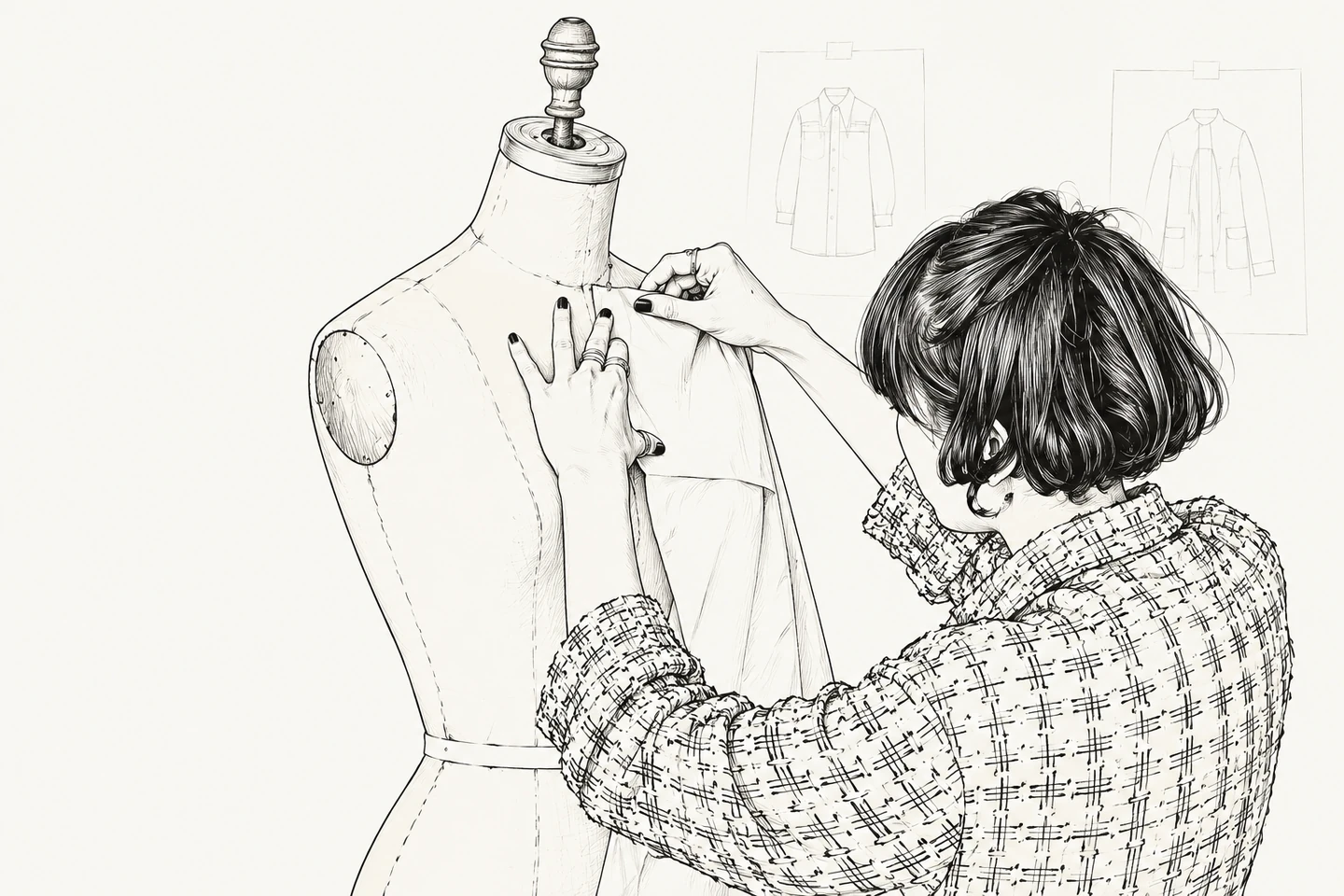
At school, we learn the classics. Fashion education is no exception. Paul Poiret, Christian Dior, Yves Saint Laurent, Jean-Paul Gaultier, Thierry Mugler: we study the greats, hoping to find the spark that will bring the next generation of designers into being. Galliano, McQueen and Phoebe Philo have shaped designers working today. Who will follow them?
Many of the students now at fashion school were born after 2000. Who will their references and inspirations be? The fashion industry puts out plenty of images and messages. Without a creative vision to sustain them, brands risk becoming empty shells or ghosts wandering through their own past.
The rise of superstar designers
For decades, fashion revolved around the myth of the creative genius whose talent bordered on the divine. For brands, the attraction of these figures was a gift. Their designers became powerful marketing and public relations assets. Distinctive personalities, each with a creative world of their own.
It began with a personal story. Christian Dior, Yves Saint Laurent, Paul Poiret, Gabrielle Chanel and Jeanne Lanvin founded houses that bear their names. This fed the myth of the all-powerful creator sitting in an atelier, surrounded by dozens of craftspeople working in the shadows for the founder’s eternal glory.
Paco Rabanne, Emanuel Ungaro, Valentino, Vivienne Westwood, Jean-Paul Gaultier, Thierry Mugler, Karl Lagerfeld, John Galliano and Alexander McQueen carried that myth to its height. Some became characters in their own right, sometimes divisive and known around the world. Their influence reached far beyond fashion. Today, the role of that public figure has changed.
The pace inside the fashion house
Careers such as those of Phoebe Philo and Stella McCartney have also broadened the ways a designer can exercise influence. Each has defined a wardrobe, a view of women and an approach to making collections. These careers overlap, making any clean division between the eras difficult to sustain.
Commercial pressure from the large groups and the difficulties facing ready-to-wear make the demands heavier. Brands have to inspire people and sell. Revenue and profitability targets come on top of packed calendars. Producing several collections a year requires considerable effort. In a 2015 interview with Cathy Horyn for System, Raf Simons explained that Dior’s six annual shows left him too little time to let ideas develop and think with his teams. Every second counts. One collection ends and the next is already being made.
Houses also need to survive the death or departure of their designers. Their public image and communications cannot depend entirely on one person. The risk to their future is too great.
Designers leading houses today have to establish their authority on how we want to dress. Choices about fabrics, shapes or the number of pieces in a collection become statements. Jonathan Anderson at Dior, Matthieu Blazy at CHANEL and Sarah Burton at Givenchy hold particularly exposed positions. They have to convince management, shareholders and buyers, and win the affection of the press. A difficult position.
The State of Fashion 2026, published by The Business of Fashion and McKinsey, reports that nine of the fifteen largest luxury brands appointed new creative directors in the twelve months through September 2025. Those appointments give a sense of the changes at the top of the houses. The count alone cannot explain the reasons for each departure or the length of individual tenures. The difficulty of building something over time remains, to my mind, a central concern.
How a designer’s success is judged also depends on the size of the house and the business problems their work is expected to address. New owners can change expectations. At Versace, Dario Vitale’s departure was announced on 4 December 2025, after a single collection, two days after Prada completed its acquisition. That sequence of dates does not, by itself, explain the reasons for the separation.
What might the next generation bring?
I wouldn’t assume that today’s students will share an aesthetic, a strong environmental conscience or a rejection of fame. I would look at the conditions in which they enter the profession: access to workshops, funding, clients and time for research.
The practical conditions of a designer’s working life will influence how they create. A salaried position in a studio, independent practice or starting a label will have consequences for the clothes they can produce.
I imagine the next generation bringing very personal stories, with a broader definition of the profession and several ways of exercising influence. Their visual culture will be wider. Perhaps even overcrowded. The archives of earlier designers will sit alongside cinema, video games, vintage and images generated by artificial intelligence.
Ambition could take a different shape. Some will dream of leading great houses such as DIOR or CHANEL. Others will want to make a living from a workshop with loyal clients, or through a collective practice. A small business might be regarded as a fully realised project. This may all sound very sensible, but I would be wary of imagining a standardised generation. Extravagant personalities, outsized ambitions and, surely, new public figures will be part of it too.
And that’s a good thing.
Sources & references
- Cathy Horyn, “More More More Dior.”, interview with Raf Simons, System, Issue 6, Autumn/Winter 2015
- The Business of Fashion and McKinsey, The State of Fashion 2026, “Luxury Recalibrated”, printed pages 121 and 123
- Prada Group, completion of the Versace acquisition, 2 December 2025
- Lucy Maguire, “Dario Vitale To Exit Versace”, British Vogue, 4 December 2025, reporting the house’s statement
- LVMH, Dior Autumn/Winter 2026–2027 haute couture collection by Jonathan Anderson
- CHANEL, haute couture and Matthieu Blazy’s creative direction
- Givenchy, Sarah Burton’s appointment