The Patterns We Keep Reinventing
Updated
In brief
I can understand liking an old print without wanting an old-fashioned wardrobe. A change of scale, colour or placement can make a familiar drawing feel surprisingly easy to wear. Its history adds something to the encounter, provided the design still holds our attention.
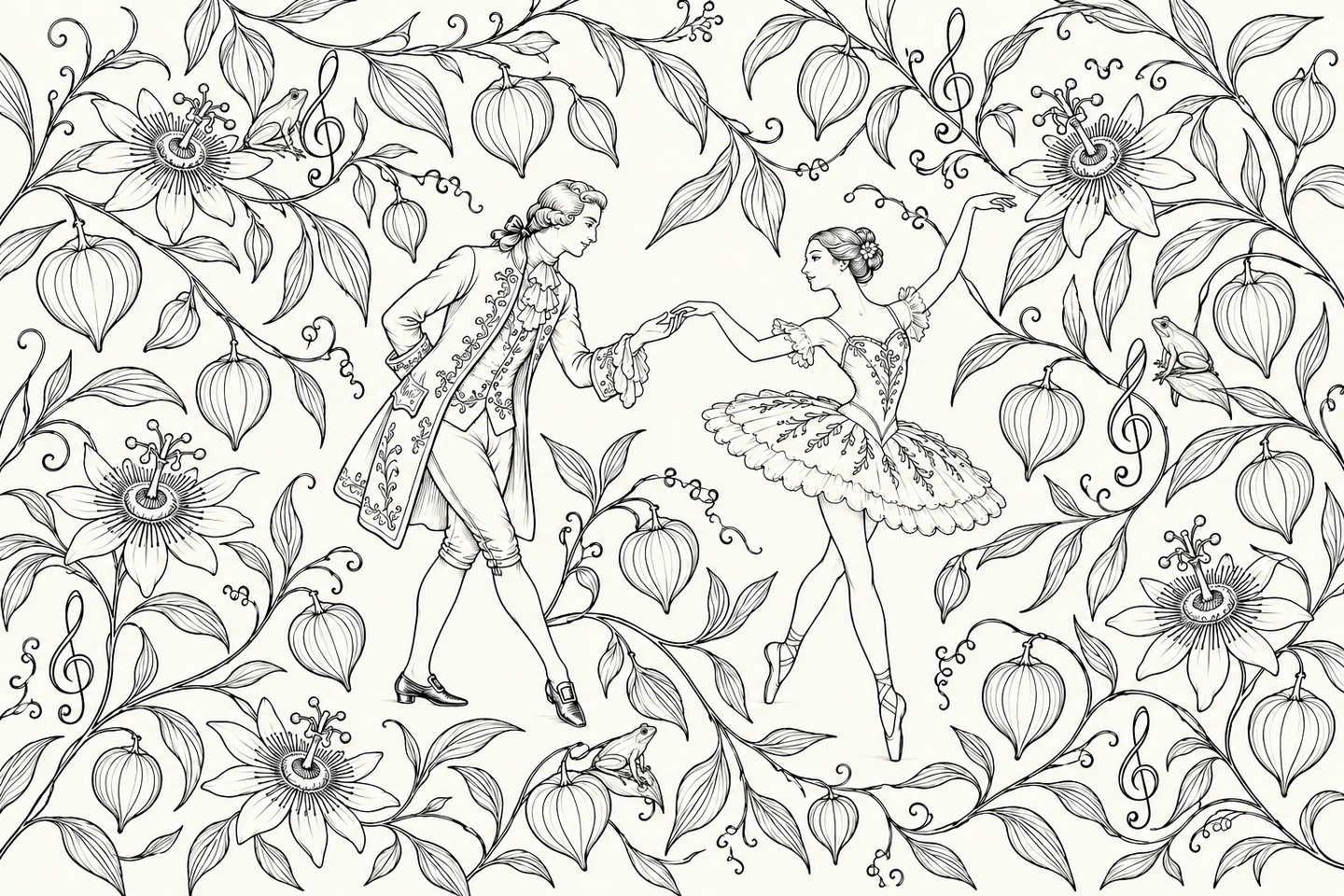
A toile de Jouy jacket would make me look at where the figures fall. Someone might disappear into a pocket. A branch could stop at a seam, then resume somewhere slightly unexpected.
Those decisions interest me because a textile drawing has to become part of something. Spread flat, the fabric gives us one view. Cutting and wearing it introduce movement, interruptions and occasionally a rather unfortunate placement.
The age of the pattern cannot do that work for the designer.
More than the pastoral scene
Oberkampf established his manufacture at Jouy-en-Josas in 1760. It produced more than 30,000 patterns over its lifetime, with floral designs accounting for most of the output. The figurative scenes we now associate so readily with toile de Jouy represented a smaller share.
I find that imbalance worth remembering. Our picture of the manufacture has become much narrower than its actual production.
The pastoral scenes have a useful openness, though. Figures and buildings sit among trees with room around them. Another designer can populate that space differently while keeping the arrangement recognisable. Dior’s Toile de Jouy Sauvage, used in its Dioriviera clothing, continues the practice of reworking that visual language.
Recognition gets me interested. I would then want to spend a little time with the drawing. Does something reward a closer look? Would I still enjoy it across the back of a coat, where the pattern has more room?
The flowers keep changing
Liberty’s archive contains more than 45,000 designs. The house opened in 1875, and Liberty Fabrics describes production of over 150 different designs a year. That is a lot of drawing behind a name we tend to associate with a familiar kind of floral print.
A small repeat can change considerably through colour alone. Leave more space between the flowers and the cloth begins to breathe differently. Pack them together and, from a distance, individual petals may become difficult to distinguish.
I suspect that distance matters more than we acknowledge. We often choose a print while holding it close. Most people will see it from across a room, moving with its wearer.
A pattern needs to work through those changes of view. Historical significance gives me little help if I dislike the result on the actual garment.
After the shawl
Paisley offers a useful reminder that survival can involve losing favour.
Kashmiri shawls bearing the curved motif reached Europe in the eighteenth century. European imitations followed, with Paisley in Scotland becoming an important manufacturing centre. The shawls began to fall out of fashion in the 1870s; the motif found further uses.
I like knowing that there was an interruption. It makes the pattern’s continued presence feel less inevitable.
Someone still has to choose it, adjust it and find a convincing place for it. A childhood association might help. So might an unfamiliar colour combination that catches the eye before the history comes to mind.
I would happily wear a pattern without knowing its name. Learning where it came from could give me another reason to keep looking.