The history of the Irish sweater is traced back to the last century when the women of the Aran Islands created these garments for their fishermen husbands to protect them against the natural elements when going out in the sea. However, after their popularization, we obviously couldn’t let men be the only ones who can enjoy these excellent sweaters, so Irish jumpers quickly became part of women’s wardrobe as well. Although there are many ways to wear it stylishly, some women still struggle to put together something more creative than a sweater and trousers combo. To help you out, we’ve created a list of fun and warm outfit ideas that you can get your inspiration from for the upcoming season.
In this specific article, we will discuss how to pair an Irish knit sweater from ShamrockGift so that your outfits will be warm without lacking style. This original online store has a wide range of sweaters, so make sure to check their women’s Irish clothing collection to get the perfect one for yourself.
Leather
Leather is one of the biggest trends of the next few months, so try combining it with an Irish sweater for a modern and bold winter look. For example, choose a chunky cable knit sweater and pair it with leather leggings or a leather skirt. This way, the contrast between the softness of the knit and the edginess of leather will create a chic style that is both fashionable and functional. Another wonderful idea would be to wear the sweater with some small leather details such as gloves, a tiny purse, or even some elbow patches to highlight the distinctive difference between leather and wool. To complete the look, add some combat boots or knee-long boots and throw on a jacket for an extra layer of warmth.
Midi Skirt
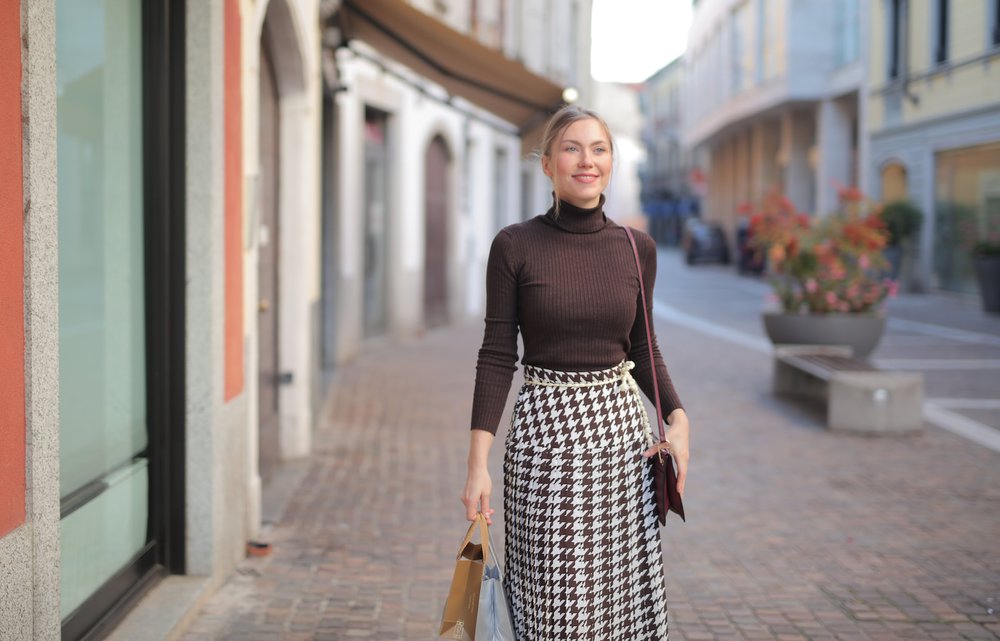
If you want to spice up your wardrobe, ditch the misconception that Irish knit sweaters are made for strictly casual outfits and pair them with a chic midi skirt to create an elegant, more formal look. To make your ensemble really stand out, opt for a neutral colored knit sweater to keep things classy and wear it with a boldly patterned skirt for a playful yet refined contrast. Tuck your Irish sweater into the skirt and accessorize the outfit with a thin belt, some high leather boots, and statement jewelry to get the best combination for a brunch with the girls or a semi-official work party.
Wide Leg Trousers
For a more put-together take on the boring jeans and sweater pairing, swap your skinny jeans for some wide leg dressy trousers. Start by getting a chunky cable knit Irish sweater in a bright color to your liking and tuck it into the high waist of some classic black trousers to accentuate your waist and make your legs visually longer. Whether you decide to wear it with Oxford shoes or Chelsea boots, such a combination is the best example of style meeting comfort and thanks to how neutral it is, it makes it an ideal choice for both casual and more posh occasions.
Carol Information sourced by the author for luxuryactivist.com. All content is copyrighted with no reproduction rights available. Images are for illustration purposes only.
When speaking of winter fabrics, most people associate the upcoming season with wool, usually forgetting about such a wonderful option as tweed. Despite tweed technically also being a wool product, it is a lot different than the regular coarse textile. To make up for it being a severely underestimated fabric for the winter months, here are some tweed garments that every man who values his style should add to his wardrobe.
Tweed Trousers
This winter, say goodbye to boring denim jeans or suit trousers and embrace the texture and pattern of tweed pants. By simply sealing your regular bottoms to a pair of these trousers, you can effortlessly change your style from casual to classy while not cutting back on comfort. Choose those tweed pants that have a timeless pattern like Herringbone, as those are the easiest to combine with both a classic white shirt and a more distinctive knit.
Tweed Vest
Vests have gained a lot of popularity in the past few years, and it is great to see these garments finally get the recognition they deserve. Contrary to popular belief, tweed vests are now as imposing as they might seem, and they can be incorporated in plenty of outfits with ease. For example, a dark tweed vest will look especially chic when worn over a fit white turtleneck sweater, thus creating an additional layer of warmth and sophistication.
Tweed Flat Cap
Ever since the airing of the Peaky Blinders series, the fashion world has gone crazy over Irish tweed flat caps, and if you don’t own one already, what are you even doing? This headpiece is more than a regular accessory – it is also a fashion statement and a token of Irish heritage. Classic colors such as gray and charcoal are definitely a go-to choice, but if you prefer a bolder style, you can find other more interesting options as well. Make sure to check out ShamrockGift men’s Irish clothing collection to choose a practical and stylish tweed flat cap to wear this season.
Tweed Blazer
At this point, the classic tweed blazer is no longer a clothing item in the fashion realm, but a true legacy. This blazer is a true game-changer when it comes to layering and styling your winter looks, be it a casual work outfit or a formal ensemble for an important event such as a wedding or engagement party. To create a laid-back combination, wear your tweed blazer with some dark jeans and a knit sweater underneath or dress it up by pairing with tailored trousers and a white shirt.
Tweed Overcoat
Finally, moving to the piece de resistance of your winter wardrobe – the tweed overcoat. This garment is the definition of statement clothing, and thankfully it not only looks luxurious but also has an opulent touch and provides all the needed warmth and comfort to survive the cold weather. Getting a tweed overcoat is a bold choice that definitely stands out in a sea of mundane winter jackets, so you are guaranteed to turn heads wherever you go.
Carol Information sourced by the author for luxuryactivist.com. All content is copyrighted with no reproduction rights available. Images are for illustration purposes only.
In the ever-evolving tapestry of television narratives, a new thread emerges, weaving together the realms of fashion and drama. The upcoming TV series, “The New Look,” slated for a 2024 release, promises to be a stunning foray into the life and legacy of one of fashion’s most iconic figures, Christian Dior. Like the designer’s revolutionary designs, this ambitious project aims to redefine viewers’ perceptions of fashion-focused storytelling. It will be released on Apple TV+ on February 14th 2024.
Why does “The New Look” stir such anticipation and interest? The answer lies in its subject – Christian Dior, a name that resonates with timeless elegance and transformative design. Dior’s story isn’t just about fashion; it’s a narrative rich with historical significance, personal triumphs, and a vision that reshaped post-war aesthetics. His designs weren’t merely clothes; they were bold statements of beauty and femininity, emerging like a phoenix from the ashes of a world recovering from the ravages of war.
This series offers a unique opportunity to explore the intricacies of Dior’s designs and the complex man behind them. In an age where fashion is often seen as transient and superficial, “The New Look” seeks to delve deeper, presenting a tale of resilience, innovation, and the enduring impact of one man’s vision on the world.
As we await its release, “The New Look” stands as a testament to the power of storytelling in television, promising to be a captivating blend of historical depth, dramatic narrative, and the timeless allure of haute couture. It’s a series that aims to depict life and envelop its audience in the very essence of Dior’s revolutionary spirit.
Christian Dior: Revolutionizing Fashion with Timeless Elegance
“Christian Dior, the name itself evokes an era of unparalleled elegance and a revolution in haute couture. As a pivotal figure in fashion history, Dior redefined women’s post-war style with his groundbreaking” New Look” in 1947, marking him as an exceptional talent whose influence continues to resonate in the fashion industry.”Christian Dior, the name itself evokes an era of unparalleled elegance and a revolution in haute couture. As a pivotal figure in fashion history, Dior redefined women’s post-war style with his groundbreaking “New Look” in 1947, marking him as an exceptional talent whose influence continues to resonate in the fashion industry.
Dior’s journey in fashion began in a time of austerity and rationing, the aftermath of World War II. In this climate, his first collection, famously dubbed the “New Look,” emerged as a bold defiance of the prevailing fashion norms. It was characterized by cinched waists, voluminous skirts, and a silhouette that celebrated femininity with a lavish opulence. This collection didn’t just challenge the status quo; it set a new standard for beauty and elegance, becoming a cultural phenomenon.
His innovative designs and visionary approach to fashion set Christian Dior apart. He saw beyond the fabric and stitches; for him, fashion was an expression of a culture, a reflection of the times. Dior’s designs responded to the need for hope and beauty in a war-torn world. He didn’t merely create clothes; he crafted an experience of luxury and femininity long forgotten in the harsh years of the war.
Photo: shakko for Wikipedia
Dior’s impact on fashion was profound and multifaceted. He was a master of marketing and branding, understanding the power of a fashion house’s image. Under his guidance, Dior became more than just a label; it was synonymous with elegance, sophistication, and the highest standards of craftsmanship. He expanded his brand globally, making Paris the centre of the fashion world and setting the template for modern fashion marketing.
“Moreover, Dior’s influence extended beyond the catwalks. He changed how women saw themselves and were seen by society. His designs empowered women to embrace their femininity confidently and gracefully. The”New Look” was not just about clothes; it was a statement of renewal, hope, and the enduring spirit of beauty.”Moreover, Dior’s influence extended beyond the catwalks. He changed how women saw themselves and were seen by society. His designs empowered women to embrace their femininity confidently and gracefully. The “New Look” was not just about clothes; it was a statement of renewal, hope, and the enduring spirit of beauty.
Christian Dior’s legacy is etched in the annals of fashion history. He was a designer who brought dreams to life through his creations, a visionary who reimagined the silhouette, and an artist who painted the canvas of the 20th century with elegance and flair. Dior was exceptional because he did not just design clothes; he created a new era in fashion, leaving an indelible mark that continues to inspire and awe designers and fashion enthusiasts alike.
The New Look: A Glimpse into Dior’s Legacy on Screen
“The New Look”, an eagerly anticipated biographical drama television series, is set to premiere on Apple TV+ in 2024. Created by Todd A. Kessler, the show delves into the life of the iconic fashion designer Christian Dior in post-World War II Paris, focusing on building his revolutionary fashion line that came to be known as the”New Look”.”The New Look,” an eagerly anticipated biographical drama television series, is set to premiere on Apple TV+ in 2024. Created by Todd A. Kessler, the show delves into the life of the iconic fashion designer Christian Dior in post-World War II Paris, focusing on building his revolutionary fashion line that came to be known as the “New Look”.
The series boasts a stellar cast, with Ben Mendelsohn portraying Christian Dior. Juliette Binoche stars as Coco Chanel, adding another layer of fashion royalty to the narrative. Maisie Williams takes on the role of Catherine Dior, Christian Dior’s sister, while John Malkovich plays Lucien Lelong. The cast is further enriched with Emily Mortimer as Eva Colozzi, Claes Bang as Hans Von Dincklage, and several other notable actors, including Hugo Becker, Alexis Loizon, Thomas Poitevin, Zabou Breitman, Jodie Ruth-Forest, and Yahli Cohen.
The production of “The New Look” began in May 2022 in Paris, a fitting backdrop for a series centred on one of the city’s most influential fashion figures. Intriguingly, the series has the potential for expansion into an anthology. The first season’s filming was followed by plans for a second season, which was set to begin in November 2023, before delays caused by the 2023 SAG-AFTRA strike.
Viewers can expect the initial release to include the first three episodes on February 14, 2024, followed by weekly releases through April 3, allowing for a gradual and immersive exploration of Dior’s fascinating world.
“The New Look” promises to be more than a biographical recount; it’s a journey into the heart of fashion history, offering a unique perspective on the life and times of Christian Dior and his contemporaries. With its compelling cast, historical setting, and rich storytelling, the series is poised to captivate audiences, weaving the elegance of Dior’s designs into the fabric of television drama.
Todd A. Kessler, the brilliant mind in this new endeavour
Photo: Patrick James Miller for Variety
Todd A. Kessler, an esteemed figure in television and film, is renowned for his creative prowess and innovative storytelling. A co-creator of the critically acclaimed legal thriller “Damages,” Kessler’s work often delves into complex characters and intricate plots, earning him a reputation for producing compelling and thought-provoking content.
Kessler’s journey in the entertainment industry is marked by his ability to craft narratives that are engaging and deeply resonant with audiences. His work on “Damages” showcased his skill in weaving suspenseful and morally ambiguous stories, a trait that has become a hallmark of his style. The series, which starred Glenn Close and Rose Byrne, was lauded for its non-linear storytelling and rich character development, aspects that Kessler masterfully orchestrated.
Beyond “Damages,” Kessler’s career includes working on the popular series “The Sopranos,” further exemplifying his flair for exploring the darker and more complex aspects of human nature. His involvement in “The Sopranos” demonstrated his versatility and ability to contribute to diverse narrative styles and genres.
With “The New Look,” Kessler embarks on a new journey, bringing to life the story of Christian Dior. This project highlights his capability to venture beyond traditional genres, tackling historical and biographical themes with the same depth and intricacy that defined his previous works. Kessler’s creative mind, adept at blending narrative sophistication with compelling storytelling, makes him a distinguished figure in contemporary television and film.
Ben Mendelsohn: A Storied Career and the Ideal Christian Dior
“Ben Mendelsohn’s journey to becoming Christian Dior on screen is a story of talent, versatility, and a career marked by compelling performances. Born on April 3, 1969, in Australia, Mendelsohn’s acting career spans over three decades, beginning with his breakout role in” The Year My Voice Broke” (1987). This early role set the stage for a career defined by depth and diversity.”Ben Mendelsohn’s journey to becoming Christian Dior on screen is a story of talent, versatility, and a career marked by compelling performances. Born on April 3, 1969, in Australia, Mendelsohn’s acting career spans over three decades, beginning with his breakout role in “The Year My Voice Broke” (1987). This early role set the stage for a career defined by both depth and diversity.
Mendelsohn’s international acclaim skyrocketed with his portrayal of Andrew “Pope” Cody in the critically acclaimed crime drama “Animal Kingdom” (2010). This role showcased his ability to embody complex characters, earning him numerous awards, including the IF Award for Best Actor and the AFI’s award for Best Actor in a Leading Role. This performance, in particular, demonstrated his capacity to delve into intricate and nuanced roles, a skill crucial for portraying a multifaceted personality like Christian Dior.
“His versatility was further evident in the Netflix drama series “Bloodline” (2015–2017), where his performance was critically lauded. Mendelsohn’s portrayal in”Bloodline” earned him a Primetime Emmy Award for Outstanding Supporting Actor in a Drama Series, further solidifying his reputation as an actor of exceptional calibre.”His versatility was further evident in the Netflix drama series “Bloodline” (2015–2017), where his performance was critically lauded. Mendelsohn’s portrayal in “Bloodline” earned him a Primetime Emmy Award for Outstanding Supporting Actor in a Drama Series, further solidifying his reputation as an actor of exceptional calibre.
Mendelsohn has also made notable appearances in major film franchises, adding to his diverse portfolio. His role as Director Krennic in “Rogue One: A Star Wars Story” (2016) and his participation in the Marvel Cinematic Universe as Talos in “Captain Marvel” (2019) showcased his ability to adapt to various genres and character types. These roles highlight Mendelsohn’s skill in bringing depth to characters within expansive fictional universes. This experience will serve him well in getting the historical figure of Christian Dior to life.
Ben Mendelsohn’s career trajectory, marked by a blend of complex character portrayals and involvement in major film projects, positions him as an ideal candidate to take on the role of Christian Dior. His proven capability to delve into the essence of his characters and his experience in high-profile projects make him a fitting choice to portray Dior, a man whose life and work encompassed both intricate personal stories and a broader cultural impact. Mendelsohn’s embodiment of Dior is poised to offer a compelling insight into the life of the legendary fashion designer.
Apple TV+: A Focus on Quality in the Streaming Universe
Photo by James Yarema
Apple TV+, launched by Apple Inc. on November 1, 2019, represents a significant foray into the increasingly competitive world of video-on-demand streaming services. Unlike many of its counterparts that boast voluminous catalogues, Apple TV+ has distinguished itself with a strategy focused on quality over quantity. This approach is evident in its carefully curated selection of films and series, which, while not as extensive as some rivals, are meticulously crafted to ensure high engagement and viewer satisfaction.
From its inception, Apple TV+ has emphasized original content, featuring a range of shows and films across various genres. This includes award-winning series like “Ted Lasso,” critically acclaimed dramas such as “The Morning Show,” and innovative projects like “The New Look,” the upcoming series about Christian Dior. The platform’s commitment to quality is reflected in its collaboration with renowned creators, directors, and actors, further elevating its offerings above the standard fare.
One of the most exciting aspects of Apple TV+ is its integration with Apple’s broader ecosystem. Subscribers can seamlessly access content across all Apple devices, offering a unified and user-friendly experience. Additionally, Apple has strategically bundled Apple TV+ with other services, such as Apple Music and Apple Arcade, enhancing its value proposition.
Apple TV+ is available on the Apple TV app in over 100 countries and regions, on over 1 billion screens, including iPhone, iPad, Apple TV, Mac, popular smart TVs from Samsung, LG, Sony, VIZIO, TCL and others, Roku and Amazon Fire TV devices, Chromecast with Google TV, PlayStation and Xbox gaming consoles, and at tv.apple.com, for $9.99 per month with a seven-day free trial. For a limited time, customers who purchase and activate a new iPhone, iPad, Apple TV, Mac or iPod touch can enjoy three months of Apple TV+ for free.
In its pursuit of high-quality content, Apple TV+ has also ventured into documentary and family programming, ensuring a diverse range of options for viewers. The platform’s focus on premium content over sheer volume sets it apart in the streaming landscape, offering a unique destination for viewers seeking engaging and thoughtfully produced entertainment. This strategy, while different, has positioned Apple TV+ as a critical player in the streaming world, driven by a commitment to excellence in content creation.
In conclusion,
“The New Look,” set to grace screens on Apple TV+ in 2024, represents a confluence of history, fashion, and high-quality storytelling. This series, delving into the life of the legendary Christian Dior, is a prime example of the platform’s commitment to delivering content that is entertaining and rich in cultural and historical value. With a stellar cast led by Ben Mendelsohn and under the guidance of directors like Todd A. Kessler and Julia Ducournau, the series promises a deep dive into the world of haute couture and the post-war era that reshaped fashion.
Apple TV+’s strategy, focusing on quality over quantity, has carved a unique niche in the streaming landscape. By prioritizing engaging and thought-provoking content, it offers viewers a distinct alternative to the often overwhelming choice of other platforms. This approach, aligning with Apple’s broader ethos of innovation and excellence, ensures that each offering is more than just a show or film; it’s an experience.
“As we anticipate” The New Look”, we’re reminded of Dior’s philosophy, which resonates with the ethos of the series and Apple TV+: “Simplicity, good taste, and grooming are the three fundamentals of good dressing, and these do not cost money.” This series, and the platform it calls home, embodies this spirit of simplicity and quality, promising to dress our screens with elegance and sophistication, befitting the legacy of Christian Dior.”As we anticipate “The New Look,” we’re reminded of Dior’s philosophy, which resonates with the ethos of the series and Apple TV+: “Simplicity, good taste, and grooming are the three fundamentals of good dressing, and these do not cost money.” This series, and the platform it calls home, embodies this spirit of simplicity and quality, promising to dress our screens with elegance and sophistication, befitting the legacy of Christian Dior.
José Amorim Information sourced by the author for luxuryactivist.com. All content is copyrighted with no reproduction rights available. Images are for illustration purposes only.
The journey to healthy hair starts with enough moisture. Hair that struggles to find or keep enough moisture not only feels and looks dry but also brings a range of other woes. In order to moisturize your natural locks, your first drive should be to pick a product that is hydrating or moisture rich.
But do you know that moisturization and hydration are two unique things? Since many people use these two terms interchangeably in the world of beauty, your confusion is justified. Before you figure out whether your hair requires a hydrating or moisturizing shampoo, let’s discover more.
Difference Between Moisturizing and Hydrating Shampoo
The layer of hair they target is the primary difference between moisturizing and hydrating shampoos. Hydrating hair care products target the inner layer of the hair follicle. Their moisturizing counterparts focus on the cuticle. The cuticle is the outer layer of the hair strands. Another difference is how these two products work. Hydrating shampoos use moisture and water from the environment to replenish your locks. Moisturizing shampoos on the other hand, trap existing moisture and create a barrier to lock it in.
Moisturizing products are designed and created to be used daily. When it comes to their hydrating equivalents, they’re formulated to be used less frequently since they are designed as treatments. Moisturizing products that enhance natural moisture restoration from the scalp are super vital in terms of maintaining your overall hair health. They have hydrophobic oils that function as moisturizer sealants. These products are specifically formulated to help boost the level of moisture by forming a natural barrier around your hair fiber.
Individuals with curly hair usually have naturally parched, coarse tresses that require enough moisture. These products are a perfect choice to add into your hair care routine if you want to have gorgeous, curly locks.
Photo by Erick Larregui
How to Hydrate Your Hair
If hair hydration is what you’re after, you need a conditioner and shampoo that gently cleanses and nourishes your locks. This provides them with much-needed hydration. The best product for your hair can be a top-rated aloe vera shampoo. Your shampoo product needs to be formulated with
Zero silicones
Parabens
Dyes
This shampoo removes dirt gently, without having to strip your hair of its natural oils and nutrients. Your nutrient-infused shampoo product should also contain a perfect blend of antioxidants and vitamin B5. Pair your shampoo with an aloe vera gentle hydrating conditioner for maximum results. Make sure the gentle hydrating conditioner is silicone-free and lightweight. But why should you go for products that contain aloe vera.
Aloe vera features nourishing properties that help hydrate your tresses. With these nutrient-infused shampoos and conditioners, you’re sure to enjoy the benefits of healthy, hydrated hair.
How to Moisturize Your Hair
To give them a new life, ensure your locks are well-moisturized. How do you know that your locks are being moisturized properly? When each strand is moisturized, your hair produces an unmissable gorgeous shine. If you want to moisturize your hair and flaunt good looking locks each day, keep in mind the following important tips:
Make sure the moisture doesn’t escape by using a moisture-rich conditioner and shampoo.
Deep condition your hair using a well-formulated deep conditioner.
After shampooing and deep conditioning your hair, don’t rinse with hot water.
If your hair loses moisture through the course of the day, look for a high-quality leave-in conditioner.
How Can Your Natural Locks Benefit from Hydration and Moisturization?
Hydration doesn’t provide your hair with moisture directly. It boosts your hair’s capability to absorb enough water, which will keep it hydrated for a long period. You need to keep your locks moisturized so that they can retain all of its hydration. When your hair loses its moisture, it becomes:
Scratchy
Brittle
Frizzy
Dry
While it doesn’t look attractive, it can quickly become damaged. And that’s why hydration and moisturization are important.
Final Thoughts
The key to deeply understanding your hair care needs and requirements depends on gauging whether your locks require moisturization or hydration. With the right hydrating and moisturizing shampoo, you can be sure to get hydrated, healthy hair that is well-moisturized and features a glamorous shine that will last longer.
Carol Information sourced by the author for luxuryactivist.com. All content is copyrighted with no reproduction rights available. Images are for illustration purposes only.
The United Kingdom is witnessing a remarkable revival of its time-honoured craftsmanship traditions. From the meticulous tailoring of Savile Row to the exceptional artistry of Northampton shoemaking, this renaissance represents not just a cultural revival but also a savvy investment opportunity.
The History and Evolution of British Craftsmanship
British craftsmanship has a storied history, deeply intertwined with the nation’s cultural identity. This heritage spans centuries, from the skilled hands of medieval blacksmiths to the refined techniques of modern-day artisans. Today, the renaissance of this craftsmanship isn’t just about preserving these skills; it’s about evolving them, blending traditional methods with contemporary aesthetics.
Consider the tailors of Savile Row, where bespoke suits are crafted with an attention to detail that’s become synonymous with luxury. Each suit, constructed over dozens of hours, is tailored to the minutest specifications of its wearer. The fabric, the stitching, the fit – every element is a testament to the tailor’s skill. These suits, often passed down through generations, can appreciate in value, making them a wise financial choice for those who value longevity over fleeting trends.
Similarly, the shoemakers of Northampton represent a pinnacle of craftsmanship. Here, shoes are not merely fashioned but are sculpted with precision and care. From selecting the finest leathers to employing time-tested hand stitching techniques, these artisans ensure that each pair of shoes is a work of art. These shoes, when maintained, can last for decades, a stark contrast to the ephemeral lifespan of mass-produced footwear.
The Financial Aspect of Investing in Craftsmanship
The decision to invest in craftsmanship extends beyond a mere love for quality; it’s a financial decision rooted in the appreciation of enduring value. Unlike mass-produced items, handcrafted goods can maintain or even increase in value over time. They represent a tangible investment in quality, one that defies the depreciation trend of most consumer goods.
For those considering such investments, understanding personal financial standing is crucial. It’s essential to be aware of one’s average UK savings and investment goals before indulging in high-quality craftsmanship. This approach ensures that such luxury purchases align with one’s overall financial plan, balancing the desire for quality with the practicalities of financial stewardship.
Photo by Gustavo Fring on Pexels.com
The Cultural and Economic Impact of Supporting Craftsmanship
Investing in British craftsmanship goes beyond personal acquisition; it’s about supporting a broader movement. Choosing handcrafted items contributes to sustaining a tradition, ensuring these skills are passed down and remain vibrant. This support helps maintain a diverse economic landscape where skill and quality are valued over mass production.
Moreover, this resurgence of craftsmanship is playing a pivotal role in redefining luxury. The modern luxury consumer is increasingly seeking items with a story, pieces that embody heritage and craftsmanship. This shift is not just a cultural trend but a statement against the disposable nature of modern consumerism.
The Long-Term Benefits of Quality Over Quantity
The ethos of investing in craftsmanship is anchored in the concept of buying less but buying better. This philosophy isn’t just about aesthetics; it’s about making a conscious choice towards sustainability and mindful consumption. By investing in items that last, consumers are reducing their environmental footprint, making a statement about the kind of world they want to live in.
The appreciation of handcrafted items also reflects a deeper understanding of value. It’s recognizing that true value lies not just in the price tag but in the craftsmanship, the history, and the longevity of an item.
Conclusion
The renaissance of British craftsmanship is more than a revival; it’s a movement towards sustainable luxury, a blend of tradition and modernity. It represents a conscious choice to value quality over quantity, to invest in pieces that tell a story, and to embrace a more thoughtful approach to consumption.
This revival is not just about the artisans and their crafts; it’s about each one of us who chooses to invest in these traditions. By doing so, we’re not just acquiring a piece of craftsmanship; we’re becoming a part of a story, a legacy that will endure for generations to come. As we navigate our choices, we’re reminded of the importance of aligning these decisions with our financial goals and personal values, creating a balance that enriches not just our lives but the tapestry of British cultural heritage.
Making its debut at the Cannes Yachting Festival earlier this year, Bluegame launched its first multihull motor yacht, complete with a garage for a tender garage: the Bluegame BGM75. The debut model in its range, the BGM75 sits in line with the Sanlorenzo Group owned brand, but stands on its own as the first of its kind. Featuring a groundbreaking concept that reportedly took Bluegame, together with Briand Yacht Design, roughly three years of testing and development to create, the BGM75 distinguishes itself with a layout that connects horizontal surfaces between two hulls into a single volume. Artfully creating the illusion of a monohull, a feature unachievable in traditional catamarans, her exterior and interior design is the collaborative work of renowned designers Bernardo Zuccon and Piero Lissoni. Measuring 22.7 metres in length, the exterior of the BGM75 boasts a unique look that merges the sleekness of a monohull with the benefits of a catamaran. She retains a futuristic look that maximises the 8.5-meter beam, offering increased stability, larger interior volumes, and notably reduced fuel consumption. Arguable a trailblazer straddling between two segments in yachting, read on to learn more about this innovative multihull motor yacht.
The unique layout of the BGM75 enables the inclusion of an owner’s cabin that spans the entire width of the boat, a feature seldom feasible on regular multihull catamarans. This design also cleverly utilises the space between the two hulls, often left vacant in traditional catamarans, to house an automated garage for a smaller boat. Unlike other multihull motor yachts, the BGM75 can be docked in spaces meant for regular single-hulled boats, rather than requiring larger berths for multihull yachts. Onboard, she exudes a sense of elegance and sophistication. The upper deck has an open-air concept, with space for a sit down bar, sofas and a table for alfresco dining. Depending on whether her owners opt for interior layout by Lissoni & Partners or Zuccon International Project, the open layout main deck features a galley forward with a dining table that leads into the living room.
Her interiors, furnished with neutral elements that include strong presences of wood, rattan, and marble, are partitioned by fogged-up glass, maintaining an expansive feel. Able to welcome up to eight overnight guests across four ensuite staterooms, depending on the choice of interior, this includes an expansive owner’s suite forward. In terms of sustainability and efficiency, the BGM75 sets a high bar. Her design boasts close to a 40 percent effective power savings compared to a 90-foot displacement vessel, requiring 50 percent less power than a monohull of the same volume. This is achieved through its innovative hull form, developed by Philippe Briand, and the use of carbon and other lightweight materials for non-structural components. Additionally, she can generate 5kW of green energy through 56 solar panels installed on the deckhouse.
Bluegame’s commitment to innovation is further highlighted by the BGH, a hydrogen-fueled support boat that was unveiled alongside the BGM75. This chase boat, developed in line with the design restrictions of the America’s Cup protocol, reflects the forward-thinking approach of Bluegame and Sanlorenzo in creating sustainable and high-performance yachting solutions.
The BGM75 is not just a new motor yacht, its forward design rethinks and challenges the distinctions between monohull and multihull yachts.
José Amorim Information sourced by the author for luxuryactivist.com. All content is copyrighted with no reproduction rights available. Images are for illustration purposes only.
It’s a joyful moment when two college sweethearts decide to tie the knot. However, amidst the romantic fervor, a practical concern emerges: How do we plan a wedding within our budget as college students? You’re about to embark on an exciting yet challenging adventure of cost-effective wedding planning. Keep reading as we unveil tips and tricks for planning a beautiful, inexpensive celebration of love.
One of the fundamental steps is to realize the financial constraints you might be facing as an adult in college pursuing a master’s in instructional design. Student tuition, rent, textbooks, and other expenses can minimize your disposable income significantly.
It’s also essential to be aware that while a wedding is a special occasion, it should not derail your long-term financial goals. Budgeting a wedding doesn’t demand you to compromise on your dreams, it simply means you need to balance the reality of your financial situation with your ideal experience.
Conscious financial decisions as a college student can have an extensive impact on your future. Therefore, a ticket to a beautiful wedding could be your creative mindset and thoughtful resource allocation.
Generating a Practical Budget
Setting a realistic budget is crucial in determining the style, size, and nature of your wedding. Start by listing all possible costs associated with a wedding, from the venue to the dress and decorations.
Next, assign a priority level to each cost. Certain things are non-negotiable, such as the venue, whereas others, like an elaborate cake or costly decorations, may be optional.
Remember, it’s a joint effort. Discuss this with your partner and make sure you both are aligned with the theme and the budgetary commitment it entails. Once you have set a budget, stick to it. It’s quite easy to get tempted, but an extra cost here and there can quickly add up.
Identifying Cost-Effective Venues
Photo: unsplash.com
Location: it’s said to be everything, and the choice of venue can considerably influence the wedding’s total cost. Some affordable options might include city-owned spaces like parks or beachfront areas.
Another idea might be to consider venues that are meaningful to your relationship, such as the university campus where you met or a family-owned property. Such places typically have sentimental value and can add a touch of uniqueness to your ceremony at a minimal cost.
You can also think about having a destination wedding right in your backyard. With the right decor and ambiance, your home can be transformed into a mesmerizing location.
Making Smart Decisions for Dress and Suit Selection
When it comes to choosing the perfect dress or suit, sentiment often competes against budget. However, you can still find a fantastic outfit that does not strain your wallet. Thrift stores or online platforms could offer great deals on second-hand or discounted clothes.
Moreover, going tailor-made could be an option for those looking for a more personal touch and fit, especially when on a budget. Keep in mind that tailoring needs time, so plan in advance.
The Art of Saving on Decorations and DIY Options
When it comes to wedding decorations, going DIY could add a personal touch and save you money. As college students, you probably have tons of creative ideas that can be translated into meaningful and unique decorations.
An inexpensive way to add tone and texture to your decoration is by using fabric. Whether it’s for tablecloths, chair covers, or backdrops, fabric can provide a luxurious feel at a small cost.
Additionally, lighting plays a vital role in setting the mood. Fairy lights, candles, and lanterns are affordable options that can bring warmth and romance to the venue. They provide an excellent opportunity to get creative with shapes, colors, and displays depending on the theme.
Altogether, planning a wedding on a college student’s budget might appear daunting but it can be an enriching experience. It allows you to be creative, resourceful, and learn more about your partner’s preferences.
Carol Information sourced by the author for luxuryactivist.com. All content is copyrighted with no reproduction rights available. Images are for illustration purposes only.
In the world of fashion, there’s often a misconception that looking stylish requires a hefty budget. However, the truth is that with a bit of creativity and strategic shopping, you can achieve a chic and fashionable look without emptying your wallet. In this blog post, we’ll reveal some clever tips and tricks to help you elevate your style while staying within your budget.
Embrace Timeless Elegance with Skirts that Sweep You Off Your Feet
One versatile fashion item that can instantly elevate your style is the maxi skirt. These flowy, ankle-length wonders have the power to transform your entire look while maintaining a touch of luxury, making maxi skirts not only trendy but also incredibly comfortable and flattering on a variety of body types.
Investing in a few well-fitted maxi skirts can be a game-changer for your wardrobe. You can pair them with a tucked-in blouse for a classic and sophisticated look or go for a casual vibe with a graphic tee and sneakers. The key to making maxi skirts work for you is to choose the right fabric, pattern, and colour that suits your personal style.
When shopping for maxi skirts on a budget, keep an eye out for sales, discounts, and online deals. You’ll be surprised at the stylish options available at affordable prices. Thrift stores and second-hand shops can also be treasure troves for finding unique maxi skirts that won’t break the bank.
Photo by bruce mars
Mix and Match High and Low-End Pieces
One of the secrets to achieving a luxurious look on a budget is the art of mixing high-end and budget-friendly pieces. Splurge on classic, timeless items that you can wear repeatedly and pair them with more affordable, trendy pieces to complete your outfit. This way, you can create a balanced ensemble that exudes elegance without a massive price tag.
For instance, invest in a high-quality designer handbag or a pair of well-crafted leather shoes. These timeless accessories can instantly elevate the overall look of your outfit, making it appear more upscale. Combine these luxurious touches with budget-friendly clothing items like basic tees, jeans, or even thrift finds, and you’ll achieve a stylish, high-end appearance without spending a fortune.
Accessorize Wisely
Accessories are the unsung heroes of fashion, capable of transforming a simple outfit into a fashion statement. The right accessories can make or break your look, so it’s essential to choose them wisely. Rather than splurging on every trendy piece of jewellery, invest in a few versatile, high-quality accessories that can be mixed and matched with various outfits.
Classic accessories like a statement necklace, a quality watch, or a pair of elegant sunglasses can add a touch of luxury to your style. Consider shopping for accessories during off-season sales or hunting for vintage pieces in thrift stores and consignment shops. You’ll be surprised at the hidden gems you can find while staying on budget.
Photo by Mink Mingle
Learn the Art of Tailoring
Ill-fitting clothing can instantly diminish the elegance of your outfit, regardless of its price tag. To look stylish on a budget, invest in tailoring. A well-fitted outfit can make even affordable clothing items appear custom-made and luxurious. Whether it’s a dress that needs a nip and tuck or a pair of trousers that need hemming, tailoring can work wonders for your overall look.
Rather than spending a fortune on designer garments, focus on finding clothing items that fit you well in the shoulders and torso. You can always have them tailored to your exact measurements for a fraction of the cost. A tailored fit can instantly elevate your style and give the impression of a high-end wardrobe.
Discover the Magic of Minimalism
Sometimes, less is more when it comes to fashion. Embracing a minimalist approach to your wardrobe can not only help you save money but also make you look effortlessly chic. Invest in a few essential, high-quality pieces in neutral colours like black, white, and beige. These timeless items can be mixed and matched to create various stylish outfits.
With a minimalist wardrobe, you can focus on quality over quantity, ensuring that every piece you own is both versatile and durable. This approach allows you to maintain a polished and sophisticated look without constantly buying new clothes. Quality over quantity is the essence of true luxury. In conclusion, looking stylish on a budget is entirely achievable with the right mindset and strategies. Maxi skirts, mixing high and low-end pieces, accessorizing wisely, tailoring, and embracing minimalism are just a few of the techniques you can use to elevate your style without breaking the bank. Remember, true luxury is not about the price tag; it’s about how you carry yourself and the confidence you exude in your fashion choices. So, go ahead, explore these budget-friendly tips, and unlock the door to a more stylish and sophisticated you!
Carol Information sourced by the author for luxuryactivist.com. All content is copyrighted with no reproduction rights available. Images are for illustration purposes only.
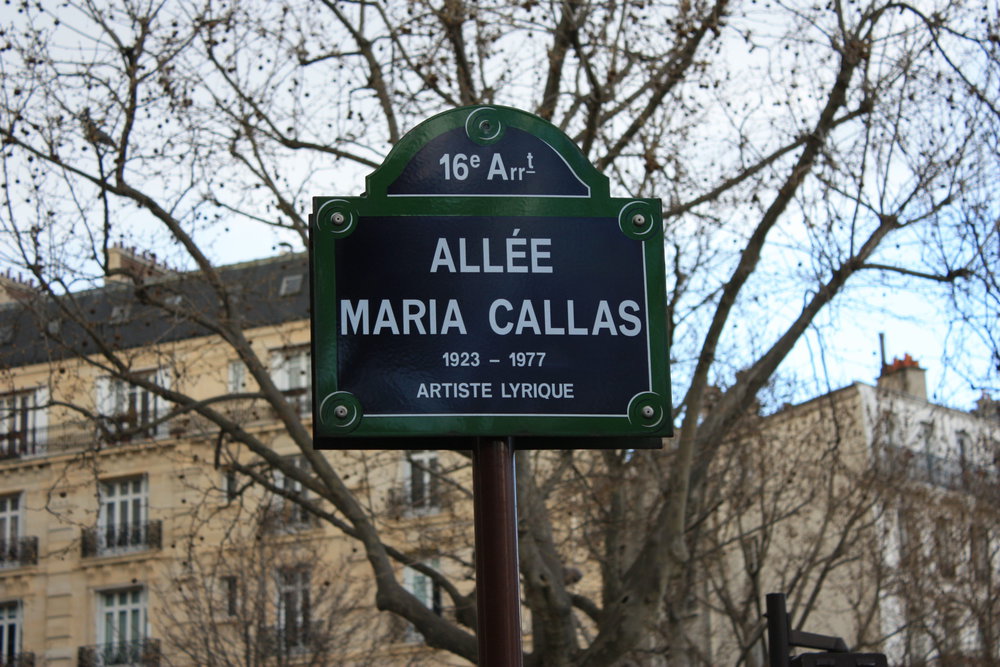
As the curtains rise to unveil the centennial celebration of Maria Callas’s birth, we peer into the storied auditorium of history to revisit the life of a woman whose voice transcended the ephemeral to etch itself into the annals of the 20th century. Born on December 2, 1923, Maria Callas, née Maria Anna Cecilia Sofia Kalogeropoulos, embarked on a journey to redefine opera’s emotional and technical realms. Her voice, a confluence of celestial purity and earthly passion, carved a niche in classical music that remains untouched, echoing the moniker ‘La Divina’ – the Divine One.
A hundred years after she entered into a world that her presence would forever alter, Callas’s legacy endures not just in recordings that capture her expansive vocal range and revolutionary bel canto technique but in the indelible influence she stamped on the art form itself. An American-born Greek soprano, Callas’s artistic contributions were as much a product of her vocal prowess as they were of her unyielding dedication and the dramatic life that unfolded both on and off the stage.
This centennial is not merely a remembrance but a reawakening of the Callas phenomenon – a celebration of an artist who brought operatic characters to vivid life, not solely through her voice, but through the sheer force of her personality and stage presence. It is a tribute to a legend whose tales of triumph and tribulation resonate as powerfully today as the performances that once captivated audiences around the globe. As we commemorate a century since her birth, we reflect on Maria Callas’s monumental impact on opera, an art form she both loved fiercely and transformed irrevocably.
And She Would Be Called Maria Callas
Traversing back to the genesis of Maria Callas’s saga, we uncover the tapestry of a complex upbringing that shaped the temperament and talent of opera’s fiercest luminary. Born in the bustling landscape of 1920s New York to Greek immigrant parents, Callas’s life was a symphony composed of contrasts from its inception. Her birth certificate may have read “Sophie Cecilia Kalos.” Still, the world would know her as Maria, a name she took on along with a destiny that would surpass her family’s aspirations.
Her mother, Litsa, was a formidable figure, with ambitions thwarted by her circumstances and a determination to manifest her dreams through her daughter. This dynamic instilled in young Callas a profound resolve and perhaps a foretaste of the dramatic flair she would later channel into her artistry. The untimely death of her brother Vassilis, coupled with the discordant marriage of her parents, composed the early overtures of tragedy and resilience that would underscore her life’s narrative.
Callas’s early exposure to music was less a gentle introduction and more a demanding immersion, with her mother ensuring that her musical education began in earnest. The family’s return to Greece when Maria was 13 provided the stage for her formal training at the prestigious Athens Conservatoire. Here, under the tutelage of esteemed instructors, the raw material of her voice began to be sculpted into something extraordinary.
Despite the shadows cast by World War II and the personal challenges of poverty and near-blindness due to her near-sightedness, Callas’s ascent was unstoppable. Her debut in Athens set the tone for a career defined by meteoric rises and precipitous falls. Even in these formative years, there was a sense of inevitability about Callas – a prelude to the divinity that would later be ascribed to her persona and performances.
This crucible of early life, marked by fervent ambition and familial tumult, was not simply a backdrop for Callas’s emergence but the anvil upon which her character and career were forged. It was here, amidst the strains of adversity and the echoes of operatic arias, that the legend of Maria Callas began to take shape, note by poignant note.
Callas with her husband Giovanni Battista Meneghini in 1957 – Source: Federico Patellani
Maria Callas – The Craft of Her Skills
As the soil of her native Greece embraced her return, young Maria Callas found herself within the hallowed halls of the Athens Conservatoire. This institution would nurture her nascent talent into a formidable force. Under the rigorous tutelage of the esteemed Elvira de Hidalgo, a soprano of considerable repute, Callas honed her voice with the discipline of a craftswoman chiselling marble into form. It was a transformative period, where the technical prowess that would become her hallmark was meticulously developed through countless hours of vocal drills and study.
Callas’s education was more than scales and arpeggios; it was an immersion into the soul of opera. Initially weighted with German arias, her repertoire soon expanded to the challenging bel canto roles that would become synonymous with her name. The Conservatoire’s stern environment, coupled with the tumult of war, fostered her musicality and an indomitable spirit that would serve her well in the competitive opera scene.
The crucible of World War II could not stifle the burgeoning voice of Callas. Her professional debut came at age 15, with a performance that hinted at the brilliance to come. It wasn’t long before she stepped onto the stage of the Royal Opera of Athens, taking on the role of Tosca, a character that would remain a touchstone throughout her career. This performance was a revelation, not just for the audience, but for Callas, affirming her destiny in the arts.
Recognition came swiftly as Callas’s voice—lustrous, agile, and haunting—began to draw attention beyond the local stages. She was awarded the first prize in a significant singing competition, leading to further engagements and the beginnings of a repertoire that would challenge and change the very fabric of opera. These early echoes of acclaim were but a prelude to the crescendo of global adulation that would follow as Callas—the student, the artist, the phenomenon—stepped into the limelight that seemed preordained to be hers.
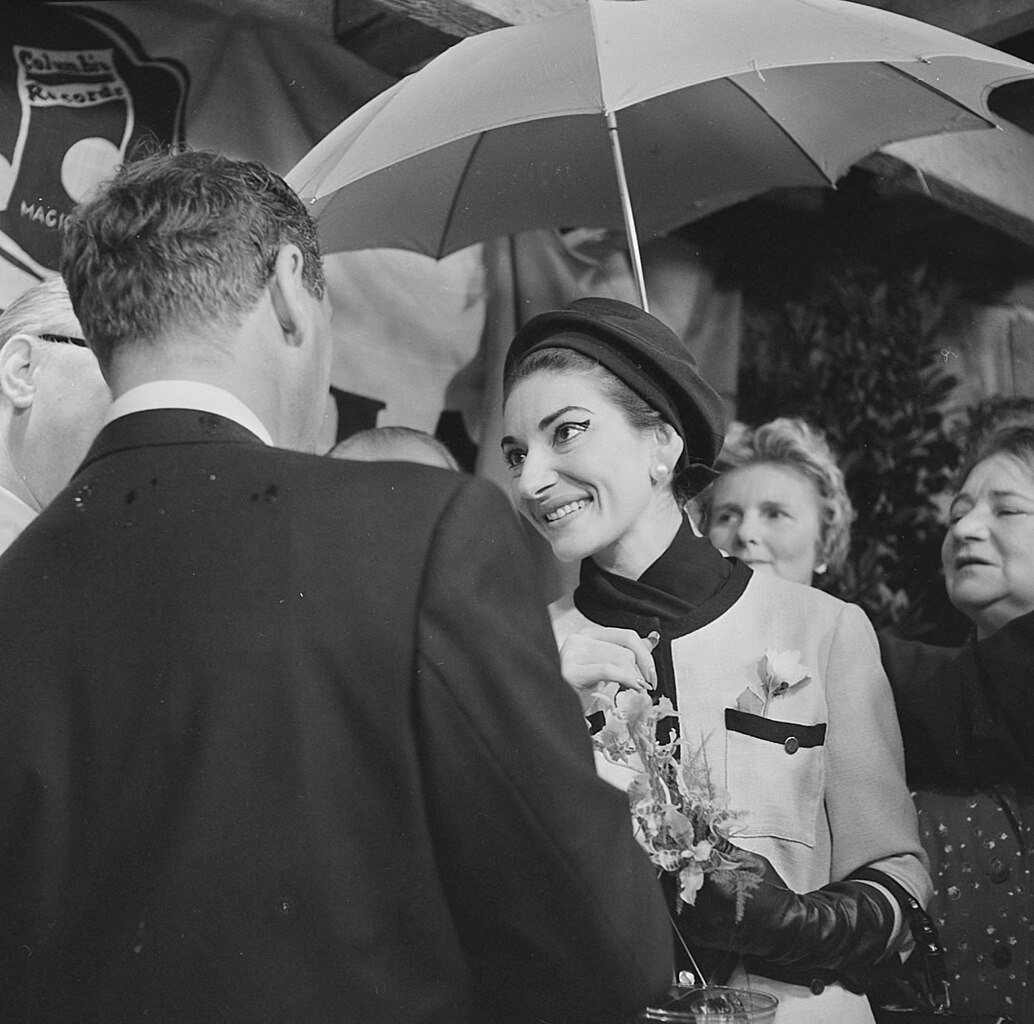
Photo: Fotopersbureau De Boer
Maria Callas and Her Rise To Fame
Maria Callas’s ascension to the zenith of operatic acclaim was as meteoric as it was mesmerizing. Post-war Europe became the canvas upon which she painted her legendary career, beginning with her Italian debut in Verona in 1947. Her performance as Gioconda marked the commencement of an era—the Callas Era—in opera. Her voice, with its distinctive timbre and emotional intensity, captivated audiences and critics alike.
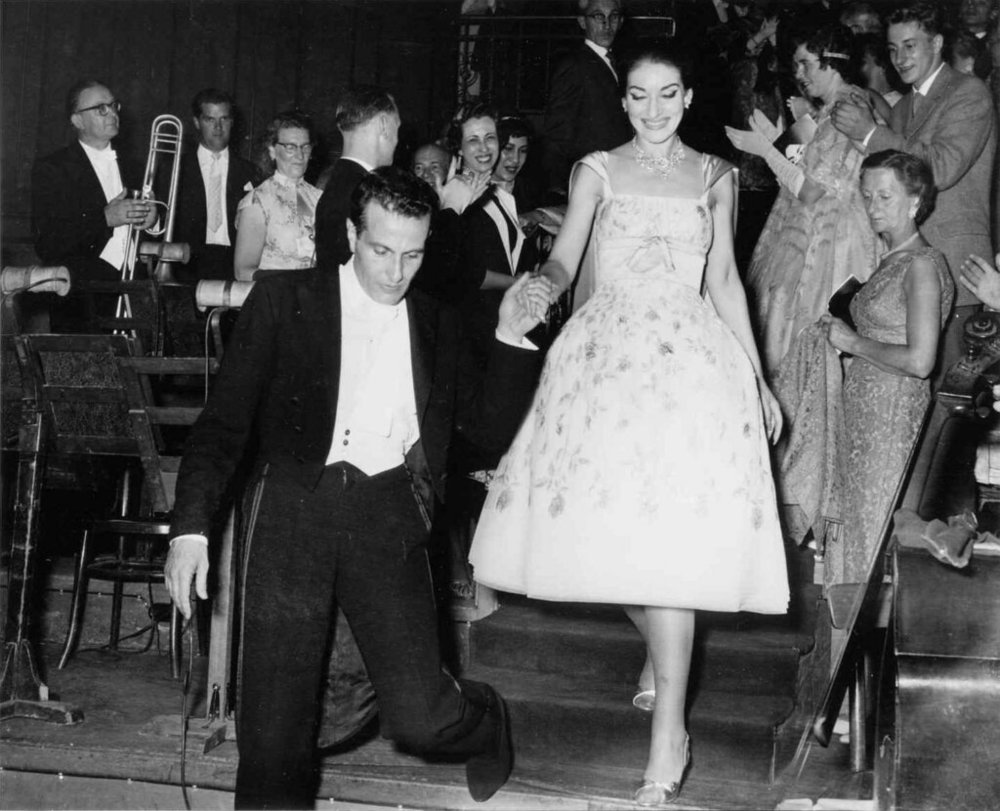
The defining moment of Callas’s rise came with her portrayal of Norma, Bellini’s Druid priestess, at La Scala in 1952. This role was made for Callas, demanding a synthesis of immaculate vocal technique and profound acting. Her ability to precisely navigate the complex coloratura passages and convey the depth of Norma’s anguish established her as a singer and a tragedienne on the stage. The “Callas effect” had begun—her artistry redefining bel canto and bringing a new era of realism to opera.
Each role Callas adopted became a study in dramatic interpretation: from the vulnerability of Violetta in “La Traviata” to the fiery defiance of Medea. Her vocal versatility was unparalleled, navigating the heights of the soprano range with ease and dipping into the mezzo register with power and clarity. The “Callas sound” was a phenomenon—an intricate alloy of vocal strength, agility, and emotional resonance that could convey a narrative in a single note.
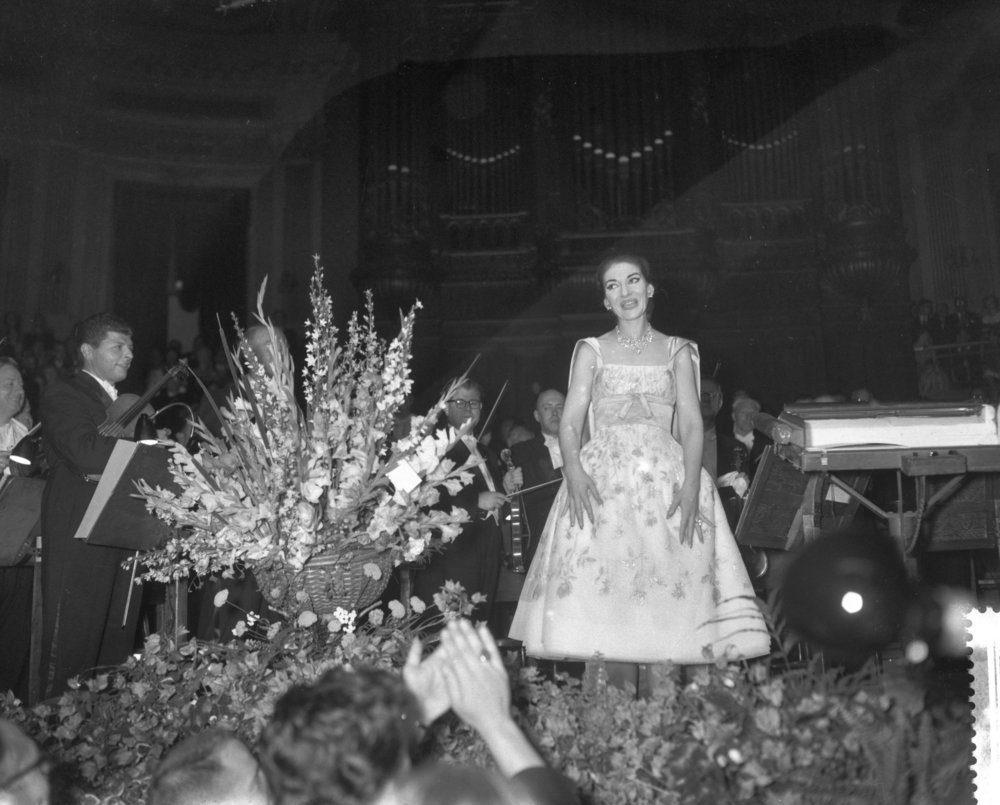
Her fame was not merely confined to the opera house. Recordings of her performances flew off the shelves, making her one of the best-selling classical artists, her voice becoming the soundtrack to a generation’s experience of opera. As her renown grew, so did her influence, forever altering the course of operatic performance and becoming the standard by which all others would be measured. The divine Callas had not only risen to fame; she had transformed it into a testament to her artistry.
Maria Callas Artistic Achievements and Vocal Technique
Maria Callas’s artistic achievements and vocal technique are the stuff of legend, a blend of meticulous craft and impassioned artistry that set her apart as an outstanding soprano. Her mastery of the bel canto technique—a style characterized by beautiful singing emphasising purity of tone and virtuosic vocal embellishments—was unparalleled. Callas revived this traditional form, infusing it with a dramatic potency that had seldom been seen before.
Bel canto requires exceptional control of vocal dynamics and agility in ornamentation, which Callas delivered efficiently. Her voice was a prismatic entity, capable of dazzling coloratura runs and trills, yet equally potent in its piercing fortissimo or haunting pianissimo. The control she wielded over her voice was as precise as a sculptor with a chisel to marble, allowing her to express a broad palette of emotions within a single phrase.
“Bel canto requires exceptional control of vocal dynamics and agility in ornamentation, which Callas delivered efficiently. Her voice was a prismatic entity, capable of dazzling coloratura runs and trills, yet equally potent in its piercing fortissimo or haunting pianissimo”.
LuxuryActivist.com
Her voice was notable for its three distinct registers: a rich, warm lower register, a complete and dramatic middle range, and a high register that, while not the most effortless, was wielded with such artistry that it left a lasting impression. It was not just the range but the colour and texture of her voice that made her stand out. She could produce a voice at once voluminous yet capable of the most delicate subtleties, allowing her to navigate the demanding roles that became her signature.
Callas’s approach to roles was methodical; she studied the score intensely, understanding her part and the entire musical and dramatic context. Her most iconic roles—such as Norma, Lucia di Lammermoor, and Medea—were marked by her ability to inhabit the characters fully. Norma conveyed both the power and the pathos of the betrayed priestess, her voice scaling the heights of vengeance before softening into the vulnerability of a woman’s grief. Lucia’s portrayal of the descent into madness during the opera’s infamous mad scene was a tour de force of vocal control and dramatic interpretation.
Beyond the technical, Callas brought an emotional intelligence to her revelatory singing. She connected with the heart of the music, transforming arias into gripping narratives. Her performances were not just heard; they were felt. This ability to elicit profound emotional responses from audiences made Maria Callas an outstanding soprano, her voice not merely an instrument but a conduit of raw emotion and dramatic storytelling.
A burning passion that was sometimes a weight to bear.
The narrative of Maria Callas’s life is punctuated by a series of personal and professional challenges that interlaced her path to stardom with tribulations. Her struggle with near-sightedness was a profound handicap for a performer; it left her nearly blind on stage, navigating the realms of grand opera through memory and spatial awareness rather than sight. This physical challenge, however, did not impede her dramatic expressions, which remained as vivid and compelling as her voice.
Perhaps the most publicized personal struggle was Callas’s dramatic weight loss. Initially, her fuller figure was typical of the operatic sopranos of the time. However, in the mid-1950s, Callas shed nearly 80 pounds, a transformation that coincided with her vocal timbre and technique shift. While the weight loss contributed to her striking stage presence and fashion icon status, it also coincided with a noticeable change in her vocal instrument—some critics posited a loss of warmth and volume in her voice, potentially marking the beginning of vocal decline.
The media were relentless in their coverage of Callas’s life, and none more so than in the case of her professional rivalry with Italian soprano Renata Tebaldi. This rivalry was as much a media creation as it reflected the natural competitive spirit between two leading opera ladies. Callas was often portrayed as the fiery, dramatic soprano, while Tebaldi was seen as the lyrical voice of warmth and sunshine. Whether genuine animosity existed, the rivalry narrative heightened the allure surrounding both singers, even as it detracted from their artistic achievements.
Moreover, Callas’s personal life was fodder for scandal, most notably her tumultuous affair with the Greek shipping magnate Aristotle Onassis. Their relationship was a saga of passion and heartbreak that played out in the glare of the public eye, further intensifying the scrutiny and pressure she faced.
Despite these challenges, or perhaps because of them, Callas’s artistry never waned. She harnessed her trials and the controversies that swirled around her, channelling them into performances of searing intensity and emotional depth. Much like the operas she performed, her life was a tapestry of dramatic highs and lows, a testament to her strength as an artist and resilience as a woman.
Her Legacy as a Love Story with Opera
The legacy of Maria Callas resonates with undiminished clarity through the annals of operatic history. Her contributions to the art form are profound and manifold, ushering in a new epoch where dramatic expression and vocal excellence became inextricably linked. Callas’s interpretative depth redefined the roles she undertook, rendering them with an emotional authenticity that became the benchmark for future generations of sopranos. Her insistence on the importance of dramatic and musical preparation for operatic roles revolutionized how performers approached their craft.
Callas’s influence extended beyond the stage. She was instrumental in reviving interest in the bel canto repertoire of the early 19th century, works which had fallen out of favour and were seldom performed before she championed them. Her performances and recordings of these pieces restored them to the canon, where they remain. Her masterclasses at Juilliard demonstrated her dedication to mentoring the next generation, ensuring her artistry and approach to music endure beyond her performances.
The impact of Callas’s art was summarized poignantly by Leonard Bernstein who called her “the Bible of opera.” This remarkable accolade from one of the 20th century’s most influential conductors and composers underscores the reverence with which her peers regarded her. Her musical peers saw in her not just a voice but a force that reshaped opera itself.
Today, Callas is still considered the epitome of the operatic diva, and her recordings continue to be best-sellers, inspiring both awe and devotion in those who hear them. Her story, embroiled with triumph and tragedy, her voice, imbued with a divine fire, and her unyielding dedication to the art form ensure that Maria Callas’s legacy will continue to be celebrated, studied, and aspired to as long as the art of opera endures.
Her Personal Life: the Greek story
Maria Callas, whose life offstage rivalled the drama of her operatic roles, found her narrative deeply entwined with Aristotle Onassis. Their connection was instant and incendiary when they met in 1957, sparking a liaison that would captivate the world’s attention. Before Onassis, Callas had wed industrialist Giovanni Battista Meneghini, who managed her burgeoning career. This relationship, however, was overshadowed by her intense bond with Onassis.
Callas and Onassis shared a complex relationship, marked by profound passion and the high-stakes world of celebrity and power. His subsequent marriage to Jacqueline Kennedy was a public blow to Callas, yet she remained inextricably linked to him until his death. The opera diva’s saga, with its highs and lows, was a poignant counterpoint to her public persona, revealing a vulnerability that her audience seldom saw on stage. Her life, steeped in love, loss, and the relentless pursuit of artistic perfection, was as captivating as any aria she ever performed.
Maria Callas and Her Late Life
Maria Callas’s twilight years were a poignant coda to a life lived with the intensity of a tragic opera. Her professional engagements dwindled in the late 1960s as her voice began to show signs of strain, leading to fewer performances and eventual retirement from the stage. The divine spark of her voice, once the clarion call of operatic brilliance, had dimmed, leading her to seek solace away from the limelight.
Despite the decline of her singing career, Callas did not vanish from the public eye. She channelled her passion for music into nurturing the next generation of opera singers through a series of masterclasses at the Juilliard School in New York. These sessions were a testament to her enduring commitment to the art form and offered a glimpse into her vast knowledge and experience.
The later years of Callas’s life were marked by a profound solitude, exacerbated by the loss of Onassis in 1975. She lived quietly in Paris, her days far from the glamorous and tumultuous life she had once led. Yet even in seclusion, the allure of her former glory remained undiminished, with her recordings continuing to captivate and her legend inspiring new admirers.
Callas passed away on September 16, 1977, at the age of 53, from a heart attack at her Paris apartment. The news of her death sent waves of mourning through music and beyond. Her funeral was attended by legions of fans and figures from the highest echelons of society, a fitting homage to a woman who had been both a titan of opera and a fixture in the tapestry of high culture.
In death, as in life, Maria Callas left an indelible imprint on the world. The end of her career did not signify the fading of her influence; instead, it marked the solidification of her status as an icon. Her recordings continue to be cherished, her performances studied and emulated, and her life story told and retold. The essence of her artistry—a relentless pursuit of emotional truth and technical mastery—remains a beacon for all who follow in her footsteps. Maria Callas, La Divina, lives on in the annals of music history, her voice a haunting echo of an era she helped define.
To conclude,
Maria Callas’s journey from the daughter of Greek immigrants to the zenith of operatic grandeur is a narrative etched in the annals of cultural history. Her life, echoing the dramatic contours of the roles she inhabited, remains a testament to the transformative power of artistry. Her voice, once heard, became a measure for all sopranos, a pinnacle of bel canto technique fused with incandescent drama. Callas’s influence endures in the reverence of her recordings and the aspirational paths of contemporary sopranos like Anna Netrebko, Sonya Yoncheva and Sondra Radvanovsky, who embody the marriage of vocal excellence and emotive potency that Callas personified.
As we commemorate the centenary of her birth, we are reminded that Callas was not just a singer; she was an era, an experience, an emotion. Her legacy is not confined to the past; it resonates in the present and guides the future. The stages of the world’s great opera houses still whisper her name, and the roles she immortalized continue to challenge and inspire. In every aspiring soprano’s voice, we hear an echo of Callas’s commitment to perfection and in every standing ovation, the applause that once thundered for La Divina.
To remember Maria Callas is to remember opera not as a mere performance but as the pulse of life itself. Her enduring impact lies in the hearts she touched and the art form she elevated. As the curtain falls on this centennial remembrance, we are left with the resounding call of an immortal voice that sang not just to the audiences of her time but to the very soul of opera itself.
José Amorim Information sourced by the author for luxuryactivist.com. All content is copyrighted with no reproduction rights available. Images are for illustration purposes only.
When it comes to creating a luxurious and well-organized living space, every detail matters. In the world of interior design, one often-overlooked element that can make a significant difference is the wardrobe. If you have a small bedroom, you might be wondering if investing in a built-in wardrobe is worth it.
The answer, without a doubt, is yes. Built-in wardrobes not only maximize space but also offer a myriad of design possibilities to elevate the aesthetics of your room. In this blog post, we’ll delve into why built-in wardrobes are an excellent investment for a small bedroom and explore some built in wardrobe ideas to inspire your next home makeover.
Maximising Space
Small bedrooms often come with limited floor space, leaving little room for bulky furniture. This is where built-in wardrobes shine. Unlike freestanding wardrobes, which can take up valuable square footage, built-in wardrobes are custom-designed to fit seamlessly into your bedroom’s layout. They can be tailored to utilize every available inch of space, from floor to ceiling and wall to wall. This not only frees up valuable floor space but also provides you with ample storage for your clothing, accessories, and more.
Photo by Huy Nguyen
Efficient Organization
Luxury living is all about efficiency and convenience. Built-in wardrobes offer precisely that. With customizable shelves, drawers, and hanging spaces, you can create a wardrobe interior that perfectly suits your needs. No more struggling to find your favourite pair of shoes or that special evening dress hidden in the depths of a cluttered closet. Built-in wardrobes allow you to organize your belongings efficiently, making your daily routine smoother and more enjoyable.
Seamless Aesthetics
In a luxury lifestyle, aesthetics matter just as much as functionality. Built-in wardrobes can seamlessly blend with the overall design of your bedroom. Whether you prefer a modern, minimalist look or a classic, opulent style, these wardrobes can be customized to match your preferences. You can choose from a wide range of finishes, materials, and hardware to create a wardrobe that not only complements your room but also adds a touch of sophistication.
Customization Possibilities
Speaking of customization, the world of built-in wardrobe ideas is virtually limitless. You can work with a professional designer to create a wardrobe that fits your exact vision. Want a mirrored door for added elegance and functionality? No problem. How about incorporating built-in lighting to showcase your designer clothing collection? It can be done. The ability to tailor your wardrobe to your unique tastes and requirements is one of the key reasons why built-in wardrobes are a must-have in any luxury bedroom.
Enhancing Resale Value
While luxury is often about personal indulgence, it’s also an investment. A well-designed built-in wardrobe not only elevates your daily living experience but can also enhance the resale value of your home. Prospective buyers are often willing to pay a premium for a home that boasts custom-built storage solutions. So, not only do you get to enjoy the benefits of your investment while you live in your home, but you can also reap the rewards when it’s time to sell.
Creating a Focal Point
One of the more innovative built-in wardrobe ideas is to turn it into a focal point of your bedroom’s design. Instead of hiding it away, you can make it a striking feature. This can be achieved by choosing bold colours, unique textures, or even adding decorative elements like moulding or glass accents. A stylish built-in wardrobe can become a conversation piece, adding character and charm to your bedroom.
Photo by Backbone Visuals
Streamlining Your Morning Routine
In the world of luxury living, time is of the essence. A well-organized built-in wardrobe can help streamline your morning routine. With everything neatly arranged and easily accessible, you can pick out your outfit with ease and start your day feeling confident and composed. No more rummaging through cluttered closets or dealing with wrinkled clothes. A built-in wardrobe can be a game-changer for your daily routine.
Increasing Accessibility
Accessibility is a crucial aspect of luxury living, especially if you have a collection of high-end fashion items, shoes, or accessories. Built-in wardrobes can be designed with specialized compartments and storage solutions to keep your items safe and easily accessible. From pull-out shoe racks to velvet-lined drawers for your jewellery, these wardrobes can be tailored to accommodate your prized possessions with care and style.
Conclusion
In conclusion, built-in wardrobes are indeed a good investment for a small bedroom in the world of luxury living. They maximize space, offer efficient organization, and seamlessly integrate with your bedroom’s aesthetics. The customization possibilities are endless, allowing you to create a wardrobe that suits your unique style and needs. Moreover, they can enhance the resale value of your home and streamline your daily routine, making them a practical and indulgent addition to any luxury lifestyle.
When considering built-in wardrobe ideas for your small bedroom, don’t hesitate to consult with professional designers who can help bring your vision to life. With their expertise and your personal taste, you can transform your bedroom into a haven of luxury and organization that reflects your unique sense of style. So, go ahead and invest in a built-in wardrobe to unlock the full potential of your small bedroom and elevate your luxury lifestyle to new heights.
Carol Information sourced by the author for luxuryactivist.com. All content is copyrighted with no reproduction rights available. Images are for illustration purposes only.